
Proper ventilation is a cornerstone of a healthy indoor environment, yet for urban residents, it presents a significant challenge. You know you need to bring in fresh air to flush out indoor-generated pollutants, but you also want to avoid letting in the city’s traffic fumes and smog.
The question of how to ventilate your home without letting pollution in is a critical one for maintaining your health and well-being. This guide provides a strategic, data-driven approach to how to ventilate your home.
The traditional advice of “just open a window” is simply not sufficient for a city apartment. Outdoor air contains a mix of pollutants, including particulate matter (PM2.5), nitrogen dioxide, and ozone.
Opening a window can sometimes bring in more harm than good, especially during high-traffic hours, periods of high smog, or during seasonal events like wildfires. This is where you must move beyond a passive strategy and embrace a proactive, intelligent approach on how to ventilate your home.
Here are three key strategies on how to ventilate your home in a smart way:
- Time Your Ventilation: The air quality outside your window is not constant. It fluctuates throughout the day. Traffic pollution is typically highest during morning and evening rush hours. The air is often cleanest in the late night and early morning hours. By using an air quality monitor with a sensor for outdoor conditions, or a dedicated device like uHoo that can provide an outdoor air quality index, you can determine the optimal time to open your windows. For example, if you see that outdoor PM2.5 levels are low at 5 AM, that is the perfect window of opportunity to air out your home.
- Use Targeted Ventilation: Instead of a generic approach, focus your ventilation efforts. For instance, when cooking, always use a kitchen exhaust fan that vents to the outside. This is the most effective way to remove cooking-related pollutants like PM2.5 and nitrogen dioxide before they can spread throughout your apartment. Similarly, use a bathroom fan after showering to remove moisture and prevent mold growth.
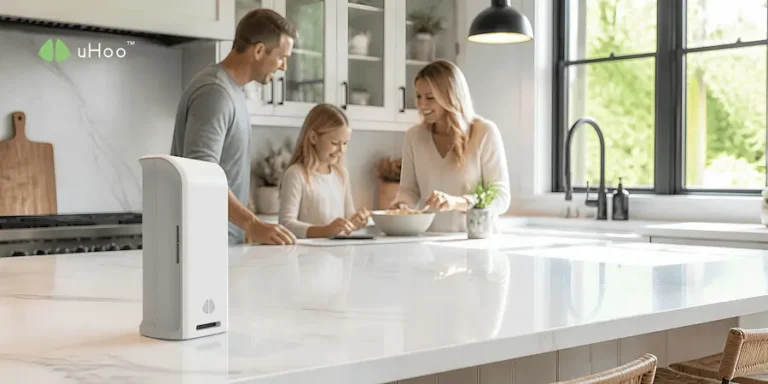
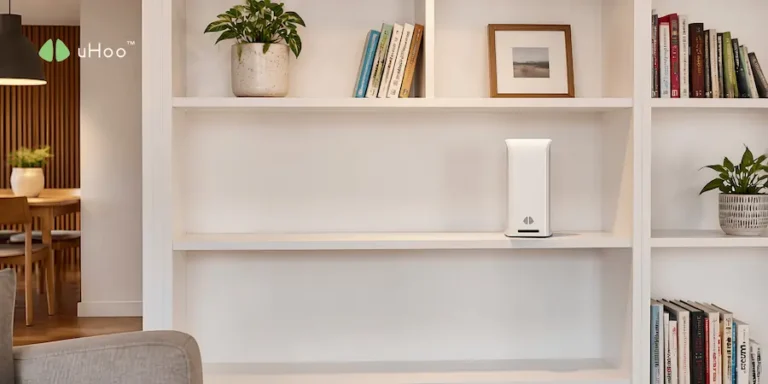
- Invest in a Smart Air Quality System: The most effective way on how to ventilate your home is to use a system that provides real-time, actionable data. The uHoo air quality monitor is the perfect tool for this. It monitors nine different air quality factors, giving you a complete picture of your indoor environment. With uHoo, you can see if your home’s carbon dioxide levels are rising, indicating a need for fresh air. At the same time, the app provides data on outdoor air quality, allowing you to make an informed decision on whether to open a window. If the outdoor air is clean, uHoo will tell you to ventilate. If it’s polluted, uHoo will advise you to keep windows closed and run a high-efficiency air purifier instead.
By combining these strategies on how to ventilate your home, you can take control of your indoor air quality. You are no longer at the mercy of the city’s pollution. By using a smart tool like uHoo, you can strategically ventilate your home, ensuring that you’re always breathing the cleanest air possible. This proactive approach to your environment is a key part of maintaining your health, focus, and professional edge in the urban world.