
Have you ever felt unusually tired while spending the day at home, even after getting a full night’s sleep? Maybe you lose focus during afternoon meetings, feel sluggish while working from home, or simply notice that certain rooms make you feel less comfortable than others. While there are many possible reasons for these experiences, one factor that’s often overlooked is Indoor Air Quality (IAQ).
The air inside your home is constantly changing. Levels of Carbon Dioxide (CO2), Volatile Organic Compounds (VOCs), humidity, temperature, and ventilation all fluctuate throughout the day. These changes don’t just affect your home’s environment, they also influence how comfortable and refreshed you feel while spending time indoors.
Understanding the connection between IAQ energy levels can help homeowners create indoor spaces that feel fresher, more comfortable, and better suited for everyday activities.
Your Indoor Environment Changes Throughout the Day
Most people assume that once the thermostat is set, their indoor environment remains fairly stable.
In reality, your home’s air changes because of everyday activities such as:
- Cooking meals
- Working from home
- Cleaning
- Showering
- Running heating or cooling systems
- Spending time with family
These activities influence several important indoor air quality factors, including:
- Carbon Dioxide (CO2)
- Volatile Organic Compounds (VOCs)
- Humidity
- Temperature
- Airflow
Because these changes happen gradually, they often go unnoticed until a room begins to feel stale or uncomfortable.
CO2 Naturally Builds Up Indoors
One of the most important indoor air quality measurements is Carbon Dioxide (CO2).
Every person exhales CO2 throughout the day.
When people spend extended periods inside enclosed spaces such as:
- Home offices
- Bedrooms
- Living rooms
- Study areas
CO2 levels naturally increase, especially when ventilation is limited.
Rather than being something you can smell or see, CO2 serves as an indicator of how effectively fresh air is entering a room.
Higher CO2 levels often suggest that indoor air is becoming stale and that additional ventilation may be beneficial.
Poor Ventilation Can Make Rooms Feel Less Comfortable
Fresh outdoor air plays a major role in maintaining indoor comfort.
Without adequate ventilation:
- CO2 gradually increases.
- Indoor pollutants remain trapped.
- Air feels stale.
- Rooms may seem stuffy.
Many newer homes are built to be highly energy efficient, meaning they are tightly sealed to reduce heating and cooling costs.
While this improves efficiency, it also reduces natural airflow, making ventilation even more important.
Temperature and Humidity Influence Comfort
Feeling energetic indoors isn’t only about air quality. It’s also about maintaining a comfortable environment.
When humidity is too high:
- Air may feel heavy.
- Rooms may seem warmer than they actually are.
- Indoor comfort decreases.
When humidity is too low:
- Air may feel dry.
- Skin and eyes may become uncomfortable.
- Indoor spaces may feel less pleasant during winter.
Likewise, temperatures that are too warm or too cool can make everyday activities feel more difficult.
Balanced environmental conditions help create spaces that feel comfortable throughout the day.
Everyday Activities Affect Indoor Air
Many common household activities influence your home’s air without you realizing it.
Examples include:
- Cooking meals
- Cleaning with household products
- Using air fresheners
- Taking hot showers
- Running fireplaces
- Working on computers in enclosed rooms
These activities affect VOCs, humidity, temperature, and airflow, contributing to the overall indoor environment.
Understanding these changes helps explain why your home may feel different at various times of the day.
Different Rooms Feel Different
Not every room experiences the same indoor conditions.
For example:
Home Offices
Long periods of occupancy may lead to increasing CO2 levels if doors remain closed.
Bedrooms
CO2 naturally rises overnight while people sleep.
Kitchens
Cooking temporarily increases VOCs, humidity, and airborne particles.
Living Rooms
Family gatherings increase occupancy and change airflow throughout the space.
These room-to-room differences demonstrate why one area of your home may feel more comfortable than another.
Seasonal Weather Also Plays a Role
Outdoor weather influences indoor conditions throughout the year.
Summer
Higher outdoor humidity can affect indoor moisture levels while air conditioning changes airflow.
Winter
Heating systems often reduce indoor humidity and homes remain closed for longer periods, limiting fresh air exchange.
Spring and Fall
Changing temperatures encourage different ventilation habits while seasonal pollen influences outdoor air quality.
Understanding these seasonal changes helps homeowners better manage indoor comfort all year long.
Long-Term Awareness Is More Valuable Than Occasional Checks
Indoor air quality isn’t static.
The conditions inside your home change hour by hour.
Tracking IAQ energy levels over time helps homeowners recognize patterns such as:
- Rising CO2 during work hours.
- Humidity changes after cooking.
- Temperature differences between rooms.
- Seasonal ventilation habits.
Rather than relying on how a room feels, long-term monitoring provides a more complete understanding of your home’s environment.
Monitor Your Home Instead of Guessing
Many important indoor air quality changes are invisible.
You cannot easily detect:
- Rising CO2
- Invisible VOCs
- Small humidity changes
- Airflow differences
Monitoring your indoor environment provides valuable insight into how everyday activities affect the air throughout your home.
Instead of guessing why a room feels uncomfortable, you can better understand the environmental conditions contributing to it.
Support a More Comfortable Home Every Day
Creating a comfortable indoor environment isn’t just about temperature. It’s about understanding how CO2, humidity, ventilation, and other air quality factors change throughout the day.
By improving airflow, maintaining balanced humidity, and becoming more aware of your home’s indoor environment, you can create spaces that feel fresher and more enjoyable for everyday living.
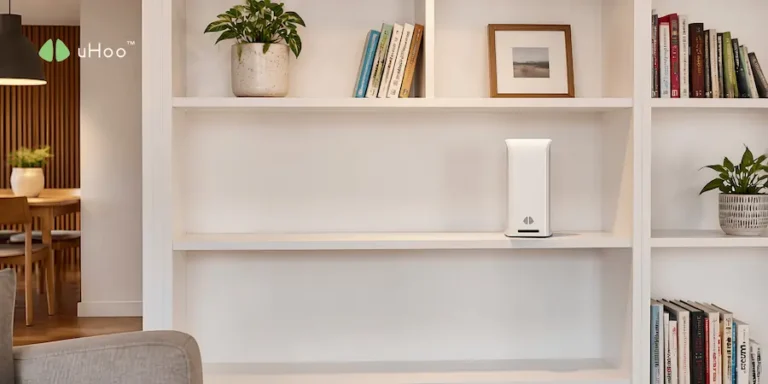
Solutions like uHoo Caeli continuously monitor important indoor air quality factors including CO2, VOCs, humidity, temperature, and more. With real-time insights, uHoo Caeli helps homeowners understand how their indoor environment changes throughout the day, making it easier to improve comfort and maintain healthier indoor air year-round.
Frequently Asked Questions
Can indoor air quality affect how comfortable I feel?
Yes. Factors such as CO2, humidity, ventilation, and temperature all contribute to indoor comfort and influence how a room feels throughout the day.
Why does my home office feel more tiring than other rooms?
Home offices often have limited ventilation during long work sessions. As occupancy increases, CO2 levels naturally rise, which can make the room feel stale if fresh air exchange is limited.
How do seasonal changes affect indoor comfort?
Seasonal weather influences humidity, temperature, ventilation, and HVAC operation, all of which affect your home’s indoor environment throughout the year.
How can I monitor indoor air quality at home?
A smart indoor air quality monitor like uHoo Caeli continuously measures CO2, VOCs, humidity, temperature, and other important environmental factors, helping homeowners better understand how their indoor environment changes every day.