
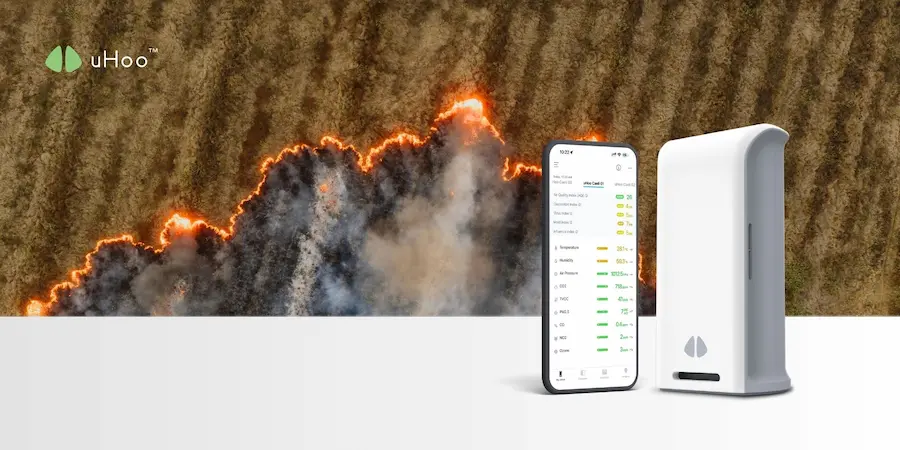
During wildfire season, air quality alerts become increasingly common across the United States and Canada. These alerts warn communities that pollution levels have reached unhealthy levels and that people should take precautions to reduce exposure.
While many people respond by staying indoors, fewer realize that poor outdoor air quality can also affect the air inside their homes.
Understanding what an air quality alert means and how it impacts your indoor environment can help you make better decisions to protect yourself and your family.
What Is an Air Quality Alert?
An air quality alert is issued when pollutants in the atmosphere reach levels that may pose health risks.
During wildfire season, these alerts are often triggered by elevated levels of fine particulate matter, commonly known as PM2.5.
Unlike smoke that you can easily see, many harmful particles are microscopic and can remain suspended in the air for long periods.
Depending on weather conditions, wildfire smoke can travel hundreds of miles from an active fire, affecting communities far from the source.
Who Is Most at Risk?
Poor air quality can affect everyone, but some people are more vulnerable than others.
Groups that may experience greater health effects include:
- Children
- Older adults
- Pregnant women
- People with asthma
- Individuals with allergies
- People living with heart or lung disease
Even healthy adults may notice symptoms such as irritated eyes, coughing, headaches, or difficulty breathing during periods of poor air quality.
Does Staying Indoors Solve the Problem?
Staying indoors is one of the first recommendations during an air quality alert, but it is only part of the solution.
Smoke particles can still enter buildings through:
- Windows and doors
- HVAC systems
- Ventilation openings
- Small cracks around the home
- Frequently opened entrances
Once smoke enters, pollutants can remain indoors unless they are filtered or removed.
This is why monitoring indoor air quality is just as important as checking outdoor air quality.
How Can You Improve Indoor Air During an Alert?
There are several practical steps you can take when an air quality alert is issued.
Keep windows and doors closed whenever possible.
Run your HVAC system using a compatible high-efficiency filter.
Use portable HEPA air purifiers in frequently occupied rooms.
Avoid activities that generate additional indoor pollution, including smoking, burning candles, and frying foods.
If you must open doors frequently, try to limit the amount of outdoor smoke entering your home.
Why Monitoring Indoor Air Matters
Outdoor air quality reports provide useful information for your region, but they cannot tell you exactly what is happening inside your home.
Every building is different.
Your indoor air quality depends on factors such as filtration, ventilation, occupancy, and how much outdoor smoke has entered the building.
The uHoo Caeli helps you monitor your indoor environment in real time so you can see how changing outdoor conditions affect your home.
Instead of guessing whether the air is improving, you can make decisions based on actual indoor air quality data.
What Should You Watch During Wildfire Season?
Several indoor environmental factors become especially important during wildfire events.
PM2.5
PM2.5 is the primary pollutant associated with wildfire smoke. Rising levels often indicate that smoke has entered your indoor environment.
Carbon Dioxide
Keeping windows closed for long periods may reduce ventilation and allow carbon dioxide levels to increase indoors.
Monitoring both PM2.5 and carbon dioxide helps you balance cleaner air with adequate ventilation.
Volatile Organic Compounds
Wildfire smoke and common household activities can both contribute to VOC levels indoors.
Reducing unnecessary indoor pollutants becomes even more important during smoke events.
Temperature and Humidity
Maintaining comfortable indoor conditions supports occupant comfort and may improve HVAC performance during extended wildfire events.
Stay One Step Ahead with Real-Time Data
Wildfire smoke conditions can change quickly as wind direction and weather patterns shift throughout the day.
An air quality alert tells you that outdoor conditions have become unhealthy, but it does not tell you when smoke begins affecting your specific indoor environment.
With the uHoo Caeli, you can continuously track PM2.5, carbon dioxide, VOCs, temperature, humidity, carbon monoxide, nitrogen dioxide, ozone, air pressure, and airborne mold risk.
These insights help homeowners, schools, offices, and businesses respond more effectively during periods of poor outdoor air quality.
Clean Indoor Air Starts with Awareness
Air quality alerts are an important reminder to protect yourself from wildfire smoke, but staying indoors is only part of the equation.
Knowing what is happening inside your home gives you the confidence to make informed decisions about ventilation, filtration, and air purification.
As wildfire seasons become longer and smoke affects more communities across North America, monitoring indoor air quality becomes an increasingly valuable part of protecting your health.
Learn how uHoo helps you understand the air you breathe every day, especially during wildfire season.