Many organizations manage building systems by responding to problems only after they appear. While this reactive maintenance approach may seem practical in the short term, it often creates hidden costs that affect operations, employee comfort, and long-term facility performance.
When it comes to reactive IAQ management, waiting for complaints or visible issues before taking action can allow small environmental problems to grow into more complex and expensive challenges.
Understanding the true costs of reactive maintenance can help organizations shift toward more proactive building management strategies.
Small issues often grow into larger problems
Indoor environmental issues rarely appear suddenly. In most cases, they develop gradually over time.
For example:
- Humidity imbalances may slowly increase mold risk
- Poor ventilation can lead to rising CO2 levels
- Hidden pollutant sources may gradually elevate VOC concentrations
When these issues are only addressed after symptoms appear, the organization may already be dealing with a more complicated problem that requires greater effort and cost to resolve.
Employee productivity can quietly decline
Air quality issues do not always lead to immediate complaints. Instead, they may influence workplace performance in subtle ways.
Employees working in environments with elevated CO2, poor airflow, or uncomfortable humidity levels may experience:
- Reduced concentration
- Increased fatigue
- Lower overall workplace satisfaction
These factors can influence productivity and workplace experience, contributing to indirect office expenses that are often difficult to measure but still impactful.
Emergency fixes are often more expensive
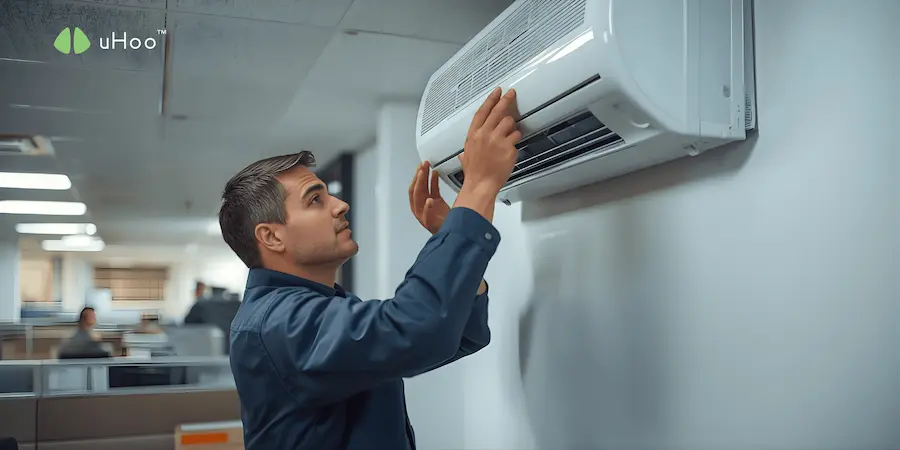
Reactive maintenance typically involves responding to urgent issues rather than scheduled improvements.
Emergency interventions may require:
- Unexpected HVAC inspections
- Urgent system repairs
- Temporary work disruptions
- Specialized environmental assessments
Because these responses occur under time pressure, they may cost significantly more than planned maintenance or preventive monitoring.
Reputation and compliance risks increase
In commercial environments, unresolved indoor air issues can also affect compliance and organizational reputation.
Workplace complaints, tenant concerns, or environmental incidents may raise questions about office safety standards and facility oversight.
For organizations operating large offices, healthcare facilities, or shared spaces, maintaining healthy indoor environments is increasingly connected to risk mitigation and regulatory expectations.
Reactive data provides limited insight
One of the biggest limitations of reactive IAQ management is the lack of historical environmental data.
When teams investigate an issue after it occurs, they often lack the information needed to understand:
- When the problem started
- How frequently conditions fluctuate
- Which areas of the building are most affected
Without this context, facility teams may struggle to identify the root cause of recurring indoor air issues.
Moving toward proactive IAQ management
Organizations are increasingly recognizing that preventive strategies can reduce operational risks and long-term costs.
Continuous monitoring solutions such as uHoo Aura provide real-time visibility into environmental conditions, helping facility teams detect air quality changes before they develop into larger building problems.
By understanding patterns in CO2, humidity, temperature, and VOC levels, businesses can move beyond reactive maintenance and make more informed decisions about building performance, employee comfort, and long-term risk mitigation.