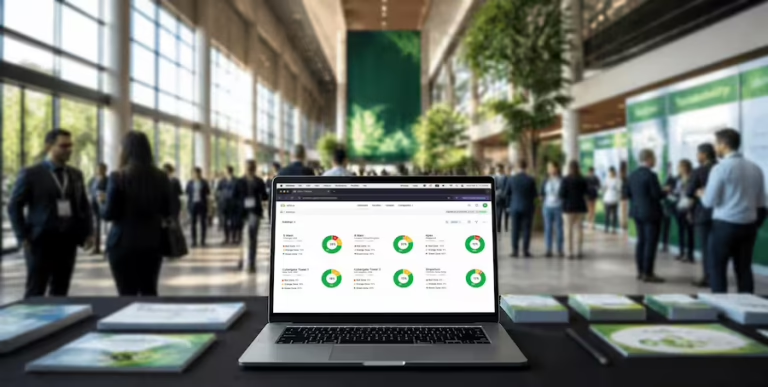

Facility managers are responsible for much more than keeping buildings operational. They oversee building systems, coordinate maintenance, manage vendors, support workplace safety, and ensure facilities meet organizational standards and applicable regulations. Among these responsibilities, Indoor Air Quality (IAQ) has become an increasingly important area of focus.
As organizations place greater emphasis on healthy buildings, employee well-being, and sustainability, facility managers are expected to understand how indoor environments perform and whether they align with industry guidelines and operational objectives. While IAQ compliance requirements vary by industry and region, maintaining good indoor air quality is now considered an essential part of effective facility management.
This article explains why IAQ compliance matters, what facility managers should consider, and how continuous indoor air quality monitoring can support smarter building operations.
What Is IAQ Compliance?
IAQ compliance refers to meeting applicable standards, guidelines, or internal policies related to indoor air quality.
Unlike some building regulations that have clearly defined legal thresholds, indoor air quality is often guided by recommendations and best practices established by organizations such as:
- ASHRAE for ventilation and indoor environmental quality
- OSHA for workplace safety guidance
- EPA for indoor air quality resources
- Healthy building certification programs such as WELL, LEED, and RESET
The specific requirements depend on the type of building, industry, local regulations, and organizational goals.
For facility managers, compliance is not simply about meeting minimum standards. It also involves maintaining environments that support occupant comfort, operational efficiency, and long-term building performance.
Why Indoor Air Quality Has Become a Priority
People spend a significant portion of their day inside buildings.
Employees work in offices.
Students attend classes.
Patients receive care in healthcare facilities.
Guests stay in hotels.
Customers visit retail stores.
Because indoor spaces are occupied for extended periods, maintaining healthy indoor environments has become an important part of responsible facility management.
Poor indoor environmental conditions can lead to occupant complaints such as:
- Stuffy meeting rooms
- Uncomfortable temperatures
- Excess humidity
- Poor ventilation
- Unpleasant odors
Monitoring indoor air quality helps facility managers better understand these conditions and identify opportunities for improvement.
The Role of Facility Managers
Facility managers coordinate numerous building systems that directly influence indoor air quality.
These responsibilities often include:
- Managing HVAC systems
- Scheduling preventive maintenance
- Monitoring ventilation performance
- Coordinating renovations
- Managing cleaning contractors
- Supporting workplace health initiatives
- Maintaining building documentation
Having accurate indoor environmental data helps facility managers make informed decisions instead of relying solely on occupant feedback.
Key Indoor Air Quality Factors to Monitor
Maintaining IAQ compliance begins with understanding the environmental conditions inside a building.
Common IAQ parameters include:
Carbon Dioxide (CO2)
CO2 is commonly monitored as an indicator of ventilation effectiveness and occupancy.
Tracking CO2 trends helps facility managers evaluate whether indoor spaces are receiving sufficient fresh air.
Volatile Organic Compounds (VOCs)
VOCs can be emitted from:
- Paints
- Furniture
- Flooring
- Cleaning products
- Office equipment
Monitoring VOC levels provides insight into indoor environmental conditions, particularly after renovations or cleaning activities.
Particulate Matter
Fine airborne particles can originate from outdoor pollution, construction activities, or indoor operations.
Monitoring particulate matter supports better understanding of overall indoor air quality.
Temperature and Humidity
Comfort depends on maintaining balanced temperature and humidity.
These environmental factors influence occupant satisfaction and overall building performance.
How IAQ Compliance Supports Air Safety
Maintaining air safety is an ongoing process rather than a one-time inspection.
Continuous monitoring allows organizations to:
- Identify environmental changes.
- Evaluate ventilation performance.
- Understand occupancy patterns.
- Detect recurring indoor environmental trends.
- Support healthier building operations.
Rather than waiting for occupant complaints, facility teams can use data to proactively manage indoor environments.
Supporting Regulatory and Industry Expectations
Different industries operate under different expectations for indoor environmental quality.
Examples include:
Corporate Offices
Organizations often align indoor environmental practices with employee wellness initiatives and workplace standards.
Healthcare Facilities
Maintaining indoor environmental quality supports patient care environments and operational requirements.
Educational Institutions
Schools and universities benefit from monitoring classroom conditions to support comfortable learning environments.
Commercial Real Estate
Property owners increasingly use indoor environmental data to demonstrate building quality to tenants and investors.
Regardless of industry, maintaining reliable IAQ data supports transparency and continuous improvement.
The Importance of Documentation
One of the most valuable aspects of continuous monitoring is documentation.
Historical environmental records allow facility managers to:
- Demonstrate ongoing monitoring.
- Evaluate building performance over time.
- Compare seasonal trends.
- Assess the effectiveness of HVAC improvements.
- Support certification or reporting initiatives.
Reliable documentation strengthens building management strategies and provides useful information for future planning.
Continuous Monitoring Provides Better Visibility
Indoor environmental conditions change throughout the day.
Factors such as:
- Occupancy
- Weather
- HVAC operation
- Cleaning schedules
- Building maintenance
all influence indoor air quality.
Periodic inspections provide only a snapshot.
Continuous monitoring provides a much more complete picture by capturing environmental trends over weeks, months, and years.
This long-term visibility helps facility managers make proactive decisions rather than reactive ones.
IAQ Compliance Supports Healthy Buildings
Healthy buildings have become a strategic priority for many organizations.
Indoor air quality contributes to broader initiatives related to:
- Employee well-being
- Sustainability
- ESG reporting
- Healthy building certifications
- Operational excellence
- Occupant satisfaction
By continuously monitoring indoor environmental conditions, facility managers can better understand how their buildings perform and identify opportunities for improvement.
Building Better Facilities Through Better Data
Facility management continues to evolve from reactive maintenance to proactive building performance management.
Access to accurate indoor environmental data helps organizations evaluate building operations, improve ventilation strategies, support air safety, and maintain environments that align with organizational goals and industry best practices.
Organizations seeking greater visibility into indoor environmental conditions can explore uHoo Aura, an enterprise indoor air quality monitoring solution designed for offices, schools, healthcare facilities, hotels, and other commercial buildings.
To learn more about business indoor air quality monitoring solutions, visit uHoo Business.
Frequently Asked Questions
What is IAQ compliance?
IAQ compliance refers to meeting applicable indoor air quality standards, guidelines, or organizational policies that help support healthy and well-managed indoor environments.
Why is indoor air quality important for facility managers?
Facility managers oversee building systems that directly affect indoor environmental quality. Monitoring IAQ helps support informed decisions related to ventilation, HVAC performance, maintenance, and occupant comfort.
What indoor air quality factors should facilities monitor?
Common IAQ metrics include CO2, VOCs, particulate matter, temperature, humidity, and ventilation performance to better understand overall building conditions.
How does continuous monitoring support compliance?
Continuous indoor air quality monitoring provides historical environmental data, helping organizations document building performance, identify trends, support reporting efforts, and make data-driven facility management decisions.