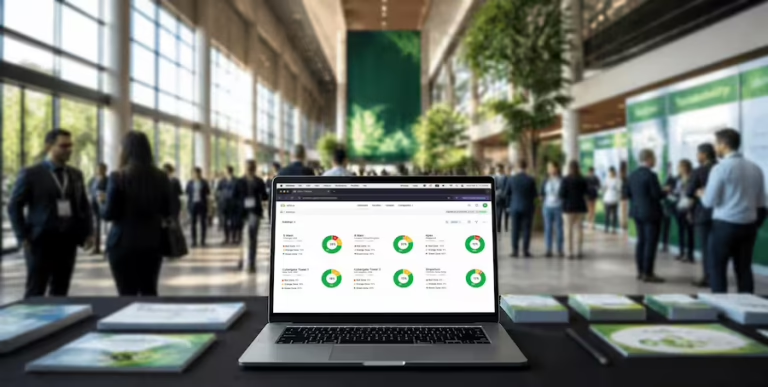
Every commercial building serves a different purpose, but they all have one thing in common: the people inside depend on a safe, comfortable, and well-managed indoor environment. Whether it’s students learning in classrooms, patients visiting healthcare clinics, employees working in offices, or visitors entering public facilities, Indoor Air Quality (IAQ) plays an important role in how a building performs.
Unlike residential spaces, commercial buildings often experience varying occupancy levels, longer operating hours, and more complex HVAC systems. These factors make IAQ in commercial buildings an important consideration for facility managers, building owners, and organizational leaders.
By understanding how indoor environmental conditions change throughout the day, organizations can make better decisions about ventilation, maintenance, and building operations while supporting healthier indoor spaces.
Why Indoor Air Quality Matters Across Commercial Buildings
People spend a significant portion of their day indoors.
The quality of indoor environments affects how buildings function and how occupants experience those spaces.
Commercial buildings often accommodate:
- Employees
- Students
- Patients
- Visitors
- Customers
- Contractors
Each group contributes to changing indoor environmental conditions through occupancy, movement, and daily activities.
Monitoring IAQ helps organizations understand these changes and evaluate how well their buildings support occupants throughout the day.
Common Indoor Air Quality Challenges
Although every building is different, many commercial facilities face similar indoor air quality challenges.
These include:
- Changing occupancy levels
- Ventilation demands
- Seasonal weather changes
- HVAC performance
- Cleaning activities
- Renovation projects
- Building materials
Understanding these factors allows facility teams to identify trends and make informed operational decisions.
Managing IAQ in Schools
Schools experience predictable occupancy cycles throughout the day.
Classrooms, libraries, cafeterias, and gymnasiums may quickly transition from empty spaces to fully occupied environments.
As occupancy increases, environmental conditions naturally change.
Facility managers often monitor factors such as:
- Carbon Dioxide (CO2)
- Temperature
- Humidity
- Ventilation effectiveness
Understanding classroom environmental conditions helps schools evaluate building performance and support comfortable learning environments for students and staff.
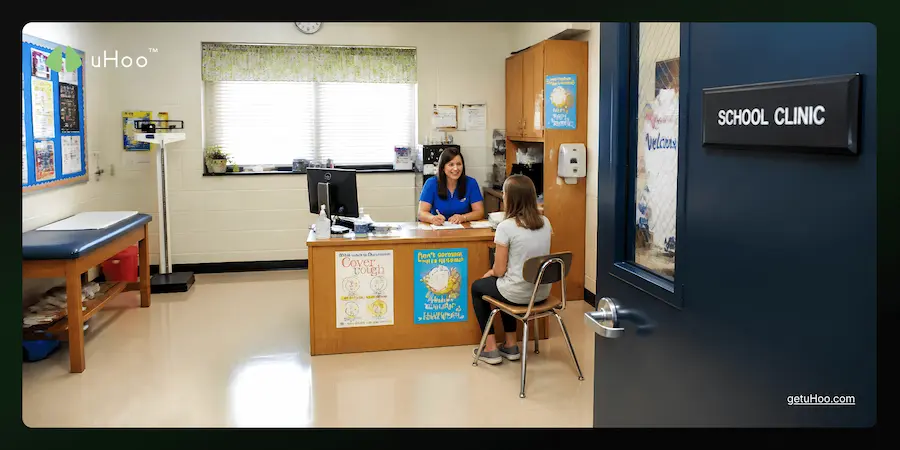
Managing Healthcare Air Quality in Clinics
Healthcare facilities require careful attention to indoor environmental conditions because they serve patients, healthcare professionals, and visitors throughout the day.
While every healthcare setting has different operational requirements, maintaining good healthcare air quality supports:
- Comfortable waiting areas
- Administrative offices
- Consultation rooms
- Staff workspaces
- Patient environments
Facility managers often monitor indoor environmental conditions to better understand how occupancy and ventilation affect different areas of a healthcare facility.
Continuous environmental data also supports long-term building management and maintenance planning.
Managing IAQ in Office Buildings
Corporate offices continue to evolve as organizations adopt flexible and hybrid work models.
Occupancy levels may vary from day to day, affecting:
- Meeting rooms
- Open-plan offices
- Shared workspaces
- Reception areas
- Break rooms
Monitoring indoor environmental conditions helps facility managers evaluate ventilation performance and understand how changing occupancy influences workplace environments.
Managing IAQ in Public Buildings
Government offices, libraries, community centers, and municipal buildings often serve large numbers of visitors with varying occupancy throughout the day.
These facilities benefit from understanding:
- Peak occupancy periods.
- Ventilation performance.
- Indoor environmental trends.
- Seasonal building conditions.
Continuous monitoring provides valuable information that supports long-term facility planning.
Managing IAQ in Hospitality
Hotels, conference centers, and event venues experience constantly changing occupancy.
Guest arrivals, conferences, restaurants, and meeting spaces all influence indoor environmental conditions.
Monitoring IAQ allows hospitality organizations to better understand:
- Guest area performance.
- Conference room conditions.
- Shared space occupancy.
- Indoor environmental consistency.
These insights help support comfortable indoor environments for both guests and employees.
Key IAQ Metrics Every Facility Should Monitor
Regardless of building type, several environmental factors provide valuable insight into indoor conditions.
Carbon Dioxide (CO2)
CO2 is commonly monitored as an indicator of ventilation effectiveness and occupancy.
Tracking CO2 trends helps facility managers evaluate how building usage affects indoor environments.
Volatile Organic Compounds (VOCs)
VOCs may originate from:
- Building materials
- Cleaning products
- Furniture
- Office equipment
- Renovation projects
Monitoring VOCs helps organizations understand how indoor conditions change over time.
Temperature and Humidity
Maintaining balanced temperature and humidity contributes to comfortable indoor environments and supports effective building management.
Particulate Matter
Monitoring airborne particles provides additional insight into filtration performance and indoor environmental quality.
Why Continuous Monitoring Is Important
Commercial buildings rarely operate under identical conditions every day.
Occupancy changes.
Weather changes.
HVAC systems cycle.
Maintenance activities occur.
Cleaning schedules vary.
A one-time inspection captures only a snapshot of building performance.
Continuous monitoring provides long-term visibility into:
- Daily occupancy trends.
- Seasonal environmental changes.
- Ventilation effectiveness.
- HVAC performance.
- Historical building data.
This information helps facility managers make proactive decisions rather than reacting only after concerns arise.
Supporting Better Facility Management
Environmental data supports many aspects of commercial building management.
Facility teams can use IAQ information to:
- Evaluate ventilation strategies.
- Improve maintenance planning.
- Monitor building performance.
- Support healthy building initiatives.
- Understand occupancy patterns.
- Identify long-term environmental trends.
Better visibility leads to more informed operational decisions.
Healthy Buildings Support Every Occupant
Whether managing a school, healthcare clinic, office building, or public facility, maintaining good indoor air quality contributes to healthier and more comfortable indoor environments.
Every building is unique, but understanding how environmental conditions change over time allows organizations to continuously improve building performance while supporting the people who use these spaces every day.
Organizations interested in strengthening their indoor environmental strategy can explore uHoo Aura, an enterprise indoor air quality monitoring solution designed for offices, schools, healthcare facilities, hotels, and other commercial buildings.
To learn more about enterprise indoor air quality monitoring solutions, visit uHoo Business.
Frequently Asked Questions
Why is indoor air quality important in commercial buildings?
IAQ commercial buildings strategies help organizations understand ventilation, occupancy, and environmental conditions, supporting healthier indoor environments and better facility management.
Why is healthcare air quality important?
Maintaining good healthcare air quality helps facility teams monitor indoor environmental conditions in waiting rooms, consultation spaces, administrative offices, and other occupied areas while supporting comfortable environments for patients, visitors, and staff.
What indoor air quality metrics should commercial facilities monitor?
Organizations commonly monitor CO2, VOCs, particulate matter, temperature, humidity, and other environmental factors to evaluate building performance.
How does continuous monitoring improve facility management?
Continuous indoor air quality monitoring provides real-time and historical environmental data, helping organizations identify trends, optimize building operations, improve ventilation strategies, and support healthier commercial environments.