
For millions of Americans, the arrival of spring, summer, or fall also marks the beginning of seasonal allergy season. Trees release pollen, grasses begin to grow, and weeds spread tiny particles through the air. While many people think allergies only affect them outdoors, allergens don’t stop at the front door.
In fact, some of the most common indoor allergy triggers enter your home every day through open windows, clothing, shoes, pets, and ventilation systems. Once inside, these allergens can settle on furniture, carpets, bedding, and other surfaces, where they continue to affect your indoor air quality.
Understanding how pollen and other allergens influence your home’s environment can help you create a cleaner, more comfortable living space throughout allergy season.
What Causes Seasonal Allergies?
Seasonal allergies occur when your immune system reacts to naturally occurring substances in the environment.
Some of the most common outdoor allergens include:
- Tree pollen
- Grass pollen
- Weed pollen
- Mold spores
The type of allergen varies depending on where you live in the United States and the time of year.
For example:
- Spring is often associated with tree pollen.
- Summer brings increased grass pollen.
- Fall commonly introduces weed pollen, especially ragweed.
Even though these allergens originate outdoors, they frequently make their way inside homes.
How Pollen Gets Into Your Home
Many homeowners assume that keeping their homes clean is enough to prevent allergens from entering.
However, pollen is incredibly lightweight and travels easily.
Common ways pollen enters the home include:
- Open windows and doors
- Shoes
- Clothing
- Hair
- Pets returning from outdoors
- HVAC systems
- Grocery bags and packages
Once inside, pollen can spread throughout multiple rooms as people move around the house.
Indoor Allergy Triggers Build Up Over Time
Unlike outdoor environments where wind continuously disperses allergens, indoor spaces allow allergens to accumulate.
Common places where indoor allergy triggers settle include:
- Carpets
- Rugs
- Upholstered furniture
- Curtains
- Bedding
- Pillows
- Pet beds
Walking across a carpet or fluffing a pillow can stir these particles back into the air, allowing them to circulate throughout your home again.
Your HVAC System Can Spread Allergens
Heating and cooling systems help regulate temperature, but they also move air throughout the home.
If filters are dirty or overdue for replacement, HVAC systems may circulate:
- Pollen
- Dust
- Pet dander
- Other airborne particles
Regular HVAC maintenance and timely filter replacement help support cleaner indoor air while improving airflow throughout the home.
Humidity Also Influences Indoor Allergens
Maintaining balanced humidity is an important part of managing indoor air quality.
When humidity becomes too high, it can encourage the growth of:
- Mold
- Mildew
These become additional indoor allergy triggers beyond seasonal pollen.
When humidity is too low, indoor air may feel dry and uncomfortable, especially during winter.
Keeping humidity balanced supports a healthier indoor environment throughout the year.
Pets Can Bring Allergens Indoors
Even if your pets spend only a short time outside, they can carry pollen back into your home.
Pollen often clings to:
- Fur
- Paws
- Collars
As pets move through the house, these allergens can transfer onto carpets, furniture, and bedding.
Regular grooming and wiping paws after outdoor walks can help reduce the amount of pollen entering your home.
Opening Windows Isn’t Always the Best Solution
Fresh outdoor air is beneficial for ventilation, but during periods of high pollen counts, opening windows may introduce additional allergens indoors.
During allergy season, homeowners may benefit from:
- Checking local pollen forecasts
- Opening windows when pollen levels are lower
- Using HVAC systems with clean filters
- Ventilating strategically rather than leaving windows open all day
Balancing fresh air with seasonal conditions helps maintain better air quality indoors.
Daily Activities Affect Indoor Allergens
Your everyday routine also influences allergen levels.
Simple activities such as:
- Coming home from work
- Hanging clothes in the bedroom
- Brushing pets indoors
- Vacuuming
- Making the bed
can temporarily redistribute pollen and other particles throughout the home.
Understanding these daily patterns helps homeowners better manage their indoor environment.
Indoor Air Quality Changes Throughout Allergy Season
Allergy season isn’t limited to a single day or week.
Throughout the season, indoor air changes depending on:
- Outdoor pollen levels
- Weather
- Rainfall
- Wind
- Household ventilation
- Occupancy
This means your home’s indoor environment may look the same while its air quality changes significantly over time.
Recognizing these long-term patterns provides a better understanding of your home’s overall air quality.
Monitoring Your Indoor Environment Makes a Difference
Many indoor allergy triggers are invisible.
You can’t easily see:
- Airborne pollen
- Fine particles
- Changes in humidity
- Rising CO2
- Invisible VOCs
Because these changes happen gradually, monitoring your home’s environment provides valuable insight into how conditions evolve throughout allergy season.
Instead of relying on symptoms alone, homeowners can better understand how their indoor air changes from day to day.
Create a More Comfortable Home During Allergy Season
While it’s impossible to eliminate every allergen, understanding how seasonal allergies affect indoor air allows you to make smarter decisions about ventilation, cleaning, and home maintenance.
Simple habits like replacing HVAC filters, managing humidity, cleaning regularly, and reducing pollen brought indoors can all contribute to a more comfortable living environment.
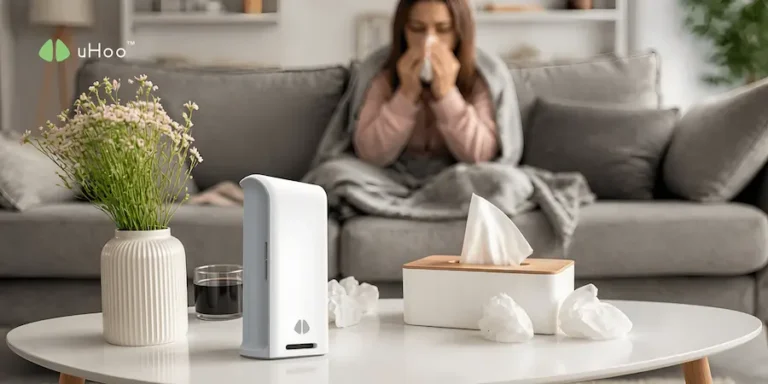
Solutions like uHoo Caeli continuously monitor important indoor air quality factors including humidity, CO2, VOCs, temperature, and more. By providing real-time insights into your home’s environment, uHoo Caeli helps homeowners recognize changes that affect air quality, making it easier to maintain a healthier home throughout every allergy season.
Frequently Asked Questions
What are the most common indoor allergy triggers?
Common indoor allergy triggers include pollen, dust, pet dander, mold spores, and other airborne particles that accumulate inside the home.
Can pollen affect indoor air quality?
Yes. Pollen easily enters homes through windows, clothing, shoes, pets, and ventilation systems, where it can settle on surfaces and become part of your indoor environment.
How can I reduce pollen inside my home?
You can reduce indoor pollen by replacing HVAC filters regularly, cleaning frequently, removing shoes at the door, grooming pets, and opening windows strategically based on outdoor pollen conditions.
How can I monitor indoor air during allergy season?
A smart indoor air quality monitor like uHoo Caeli continuously measures important environmental factors such as humidity, CO2, VOCs, temperature, and more, helping homeowners better understand how their indoor environment changes throughout allergy season.