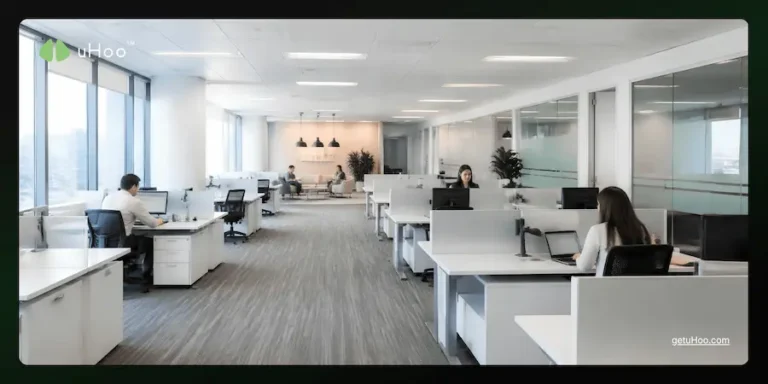

Many facility managers notice a familiar pattern. The office is comfortable when employees arrive in the morning, but by late morning or early afternoon, complaints begin to increase.
Someone mentions that a meeting room feels stuffy. Another employee says the office feels warm or uncomfortable. A conference room may seem to have poor airflow after several back-to-back meetings. While these concerns may appear unrelated, they often share one common factor: changing occupancy patterns throughout the day.
Understanding why office air complaints tend to increase around midday helps organizations improve workplace comfort, optimize building operations, and make more informed facility management decisions.
Why Indoor Conditions Change Throughout the Day
Commercial buildings are constantly changing environments.
Unlike residential homes, offices experience predictable fluctuations in occupancy and activity.
A typical workday includes:
- Employees arriving in the morning.
- Meetings beginning throughout the day.
- Shared workspaces filling up.
- Lunch gatherings.
- Afternoon collaboration sessions.
- Visitors entering and leaving the building.
As occupancy changes, so do indoor environmental conditions.
These changes are often gradual, making them difficult to notice until occupants begin to feel uncomfortable.
The Midday Occupancy Peak
For many organizations, occupancy reaches its highest level between late morning and early afternoon.
During this period:
- Conference rooms are fully booked.
- Employees are actively working at their desks.
- Shared spaces are heavily used.
- Visitors may be arriving for meetings.
- Common areas experience increased activity.
As more people occupy indoor spaces, ventilation systems must work harder to maintain comfortable environmental conditions.
If airflow does not keep pace with occupancy, employees may begin noticing changes in air quality.
The Role of Carbon Dioxide (CO2)
One of the most important indicators of changing indoor air quality is Carbon Dioxide (CO2).
Every person naturally exhales CO2 throughout the day.
In enclosed spaces such as:
- Meeting rooms
- Training rooms
- Boardrooms
- Classrooms
- Open office areas
CO2 levels gradually increase as occupancy rises.
Monitoring CO2 helps facility managers understand whether ventilation is effectively supporting the number of people using a space.
Rather than waiting for occupants to report discomfort, environmental data provides objective insight into changing building conditions.
Ventilation and Occupancy Must Work Together
Modern HVAC systems are designed to provide comfortable indoor environments.
However, building performance depends on several factors, including:
- Occupancy levels.
- Building layout.
- HVAC capacity.
- Outdoor weather.
- Ventilation schedules.
If meeting rooms remain occupied longer than expected or collaborative spaces become busier than usual, ventilation demand may temporarily exceed normal operating conditions.
Understanding these occupancy patterns helps facility teams evaluate whether building systems are aligned with actual building usage.
Other Factors That Contribute to Midday Complaints
While occupancy is often the primary reason for increasing office air complaints, other environmental factors also play a role.
Temperature Changes
As employees, computers, and office equipment generate heat, indoor temperatures may gradually rise throughout the day.
This can make occupied spaces feel less comfortable, especially in areas with limited airflow.
Humidity Fluctuations
Indoor humidity changes as people breathe and move throughout the building.
Although these changes are often subtle, they contribute to overall indoor comfort.
Meeting Room Usage
Conference rooms frequently experience consecutive meetings with little time between occupants.
Without adequate ventilation, these spaces may feel noticeably different from surrounding office areas.
Outdoor Weather
Seasonal weather conditions can influence HVAC performance and ventilation requirements.
Hot summer afternoons or cold winter mornings may require building systems to work harder to maintain consistent indoor conditions.
Why Occupant Feedback Is Valuable
Employee feedback provides important information about workplace comfort.
However, complaints alone do not always identify the underlying cause.
For example, when employees report that a meeting room feels stuffy, the issue could be related to:
- Higher occupancy than expected.
- Changing CO2 levels.
- Limited ventilation.
- Rising temperatures.
- HVAC scheduling.
- Airflow distribution.
Combining occupant feedback with environmental data provides facility managers with a more complete understanding of building performance.
The Benefits of Continuous Indoor Air Quality Monitoring
Indoor air quality is constantly changing.
A one-time inspection cannot capture how environmental conditions evolve throughout the workday.
Continuous monitoring allows organizations to observe:
- Daily occupancy trends.
- CO2 patterns.
- Temperature changes.
- Humidity fluctuations.
- Ventilation performance.
- Long-term building trends.
Historical data helps facility managers identify recurring patterns and evaluate whether operational adjustments improve indoor conditions.
Using Data to Improve Workplace Comfort
Environmental monitoring allows organizations to move beyond reactive responses.
Instead of investigating complaints one at a time, facility teams can analyze building performance using measurable information.
This data can support decisions related to:
- Ventilation schedules.
- Meeting room management.
- HVAC optimization.
- Space utilization.
- Preventive maintenance.
- Building improvements.
Better visibility leads to more informed operational planning.
Industries That Benefit From Occupancy Monitoring
Many organizations experience predictable occupancy cycles.
Continuous monitoring supports healthier indoor environments across industries.
Corporate Offices
Track meeting rooms, collaborative workspaces, and open-plan offices where occupancy changes throughout the day.
Educational Institutions
Monitor classrooms and lecture halls with scheduled occupancy.
Healthcare Facilities
Evaluate waiting rooms, clinics, and administrative offices.
Hospitality
Understand guest activity in conference facilities and event spaces.
Commercial Real Estate
Provide property owners and tenants with greater visibility into building performance and occupant comfort.
Understanding Building Performance Through Data
Midday increases in office air complaints often reflect changing building conditions rather than isolated problems.
By understanding how occupancy patterns influence ventilation, CO2, temperature, and overall indoor environmental quality, organizations can make informed decisions that support healthier and more comfortable workplaces.
Continuous monitoring provides the data needed to evaluate building performance, identify recurring trends, and improve long-term facility management strategies.
Organizations looking to better understand their indoor environments can explore uHoo Aura, an enterprise indoor air quality monitoring solution that continuously tracks environmental conditions across offices, schools, healthcare facilities, hotels, and other commercial buildings.
To learn more about business indoor air quality solutions, visit uHoo Business.
Frequently Asked Questions
Why do office air complaints increase around midday?
Many offices experience peak occupancy during late morning and early afternoon. As more people use shared spaces, CO2 levels, temperature, and ventilation demand naturally increase, which can affect overall comfort.
How do occupancy patterns affect indoor air quality?
Changing occupancy patterns influence CO2 levels, humidity, temperature, and ventilation requirements throughout the day. Monitoring these trends helps organizations better understand building performance.
Why is CO2 monitored in office buildings?
CO2 is commonly used as an indicator of ventilation effectiveness. Monitoring CO2 helps facility managers evaluate whether indoor spaces are receiving adequate fresh air for their occupancy levels.
How can businesses better understand office air quality?
Continuous indoor air quality monitoring provides real-time and historical environmental data, helping organizations identify trends, optimize building operations, and create more comfortable workplaces.