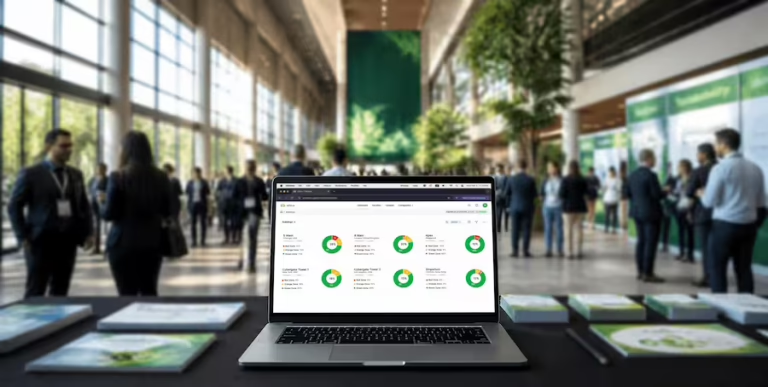

Office design goes beyond layout and aesthetics
Modern office design is no longer just about furniture placement or visual appeal. How air moves through a space plays a critical role in comfort, health, and performance. Without reliable data, even well-intentioned designs can fall short in real-world conditions.
Air quality office design focuses on creating environments that support people throughout the workday, not just on opening day.
The limits of design assumptions
Many offices are designed using assumptions about occupancy airflow and usage patterns. In practice, these assumptions often change. Teams grow, meeting rooms fill up, and spaces are repurposed over time.
Without data, designers and facility teams are left guessing whether ventilation systems are keeping up with actual demand.
How air quality data informs building ventilation
Air quality data provides insight into how ventilation performs under real conditions. Metrics such as CO2 levels, humidity, and particulate concentration reveal whether fresh air delivery is adequate across different zones.
This information helps teams
- Identify areas with insufficient airflow
- Balance ventilation across shared and private spaces
- Avoid over-ventilating low-use areas
Data-driven building ventilation supports both comfort and operational efficiency.
Supporting smarter IAQ planning
Effective IAQ planning requires understanding how indoor air changes throughout the day. Air quality data shows patterns tied to occupancy schedules, weather, and building operations.
These insights allow office designers and operators to plan spaces that adapt to real use rather than static expectations.
Designing for people, not just systems
Employees may not see ventilation systems, but they feel the effects. Stuffy rooms, headaches, and fatigue are often signs that air quality was not fully considered during design.
When air quality office design is informed by real measurements, spaces feel more comfortable and easier to work in.
A data-informed approach to future workplaces
As offices evolve, flexibility becomes essential. Continuous access to air quality data helps organizations refine layouts, update ventilation strategies, and support healthier work environments over time.
Solutions like uHoo Aura provide ongoing visibility into indoor air conditions, giving design and facility teams the information they need to make confident data-informed decisions long after the design phase is complete.