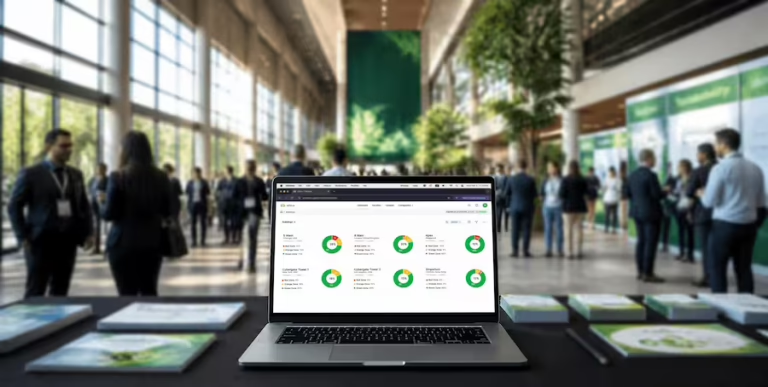

Organizations invest in technology, building improvements, and workplace initiatives with the expectation that these investments will create long-term value. While projects such as energy-efficient lighting, upgraded HVAC systems, and smart building technologies often receive significant attention, one investment that is becoming increasingly important is Indoor Air Quality (IAQ).
For many businesses, indoor air quality is no longer viewed simply as a maintenance responsibility. Instead, it is increasingly recognized as part of a broader strategy that supports building health, operational efficiency, employee well-being, and data-driven facility management.
Rather than focusing only on immediate costs, organizations are beginning to evaluate the return on investment (ROI) of maintaining healthier indoor environments. Understanding IAQ ROI helps business leaders see how continuous monitoring and better building management can contribute to long-term organizational goals.
Understanding IAQ ROI
IAQ ROI refers to the long-term value organizations gain by investing in indoor air quality management.
Unlike investments that produce immediate financial returns, improvements in indoor environmental quality often generate value over time by supporting:
- Better building performance
- More informed facility management
- Operational efficiency
- Employee comfort
- Sustainability initiatives
- Long-term asset value
Indoor air quality should be viewed as part of an organization’s overall building strategy rather than a standalone expense.
Healthy Buildings Support Long-Term Success
A commercial building is one of an organization’s most valuable assets.
Keeping that building operating efficiently requires continuous attention to multiple environmental factors, including:
- Ventilation
- Temperature
- Humidity
- Air quality
- HVAC performance
- Occupancy patterns
When these systems work together effectively, organizations create healthier indoor environments that support employees, tenants, customers, and visitors.
Investing in building health helps organizations maintain facilities that perform consistently over time.
Indoor Air Quality Is About More Than Air
Many people associate indoor air quality only with ventilation.
In reality, IAQ includes several important environmental factors, including:
- Carbon Dioxide (CO2)
- Volatile Organic Compounds (VOCs)
- Particulate matter
- Temperature
- Humidity
- Air pressure
Monitoring these factors helps organizations better understand how buildings perform throughout the day and across different seasons.
This visibility supports better operational decisions and long-term planning.
Supporting Employee Productivity
Employees spend much of their workday indoors.
Providing a comfortable indoor environment supports an overall workplace strategy focused on productivity, collaboration, and employee well-being.
Factors such as:
- Comfortable temperatures
- Balanced humidity
- Effective ventilation
- Stable indoor environmental conditions
all contribute to creating spaces where employees can perform their daily responsibilities comfortably.
While many factors influence workplace performance, maintaining good indoor environmental quality is an important part of the overall employee experience.
Reducing Operational Uncertainty
Organizations that continuously monitor indoor air quality gain greater visibility into their buildings.
This information helps facility managers answer questions such as:
- Are ventilation systems performing consistently?
- How does occupancy affect meeting rooms?
- Which areas experience recurring environmental changes?
- Are HVAC improvements producing measurable results?
- How do seasonal weather patterns influence indoor conditions?
Access to reliable data reduces uncertainty and supports more informed operational planning.
Supporting Smarter Facility Management
Modern facility management increasingly relies on measurable information rather than assumptions.
Continuous indoor environmental monitoring helps organizations:
- Track historical trends.
- Evaluate building performance.
- Monitor ventilation.
- Improve maintenance planning.
- Support preventive maintenance strategies.
Instead of reacting only after occupants report concerns, facility teams can proactively evaluate long-term environmental patterns.
Strengthening Sustainability Initiatives
Many organizations include sustainability as part of their long-term business strategy.
Indoor air quality monitoring complements these efforts by providing measurable environmental data that supports:
- ESG initiatives
- Healthy building programs
- Energy optimization
- Operational transparency
- Building performance reporting
Historical environmental records also help organizations measure progress over time.
Supporting Building Health Throughout the Building Lifecycle
Commercial buildings evolve over time.
Occupancy changes.
Renovations occur.
HVAC systems are upgraded.
Workplace layouts are redesigned.
Each of these changes can influence indoor environmental conditions.
Continuous IAQ monitoring helps organizations evaluate how these changes affect building health while providing valuable data for future planning.
The Value of Historical Data
One of the greatest advantages of continuous monitoring is the ability to build a long-term environmental record.
Historical IAQ data allows organizations to:
- Compare seasonal trends.
- Evaluate renovation projects.
- Measure HVAC improvements.
- Monitor occupancy patterns.
- Support certification programs.
- Improve facility planning.
Rather than relying on isolated inspections, organizations gain ongoing visibility into building performance.
Industries That Benefit From IAQ Investments
Long-term investments in indoor air quality benefit many industries.
Corporate Offices
Support employee comfort while improving workplace visibility.
Healthcare Facilities
Monitor environmental conditions across patient care and administrative spaces.
Educational Institutions
Create healthier learning environments while tracking building performance.
Hospitality
Maintain comfortable guest experiences and support operational consistency.
Commercial Real Estate
Provide property owners and tenants with measurable insights into indoor environmental quality.
Regardless of industry, understanding indoor environmental conditions supports better decision-making.
Looking Beyond Short-Term Costs
When evaluating investments, organizations often focus on upfront expenses.
However, indoor air quality should also be considered in terms of long-term value.
Continuous monitoring helps organizations:
- Better understand building performance.
- Improve operational planning.
- Support healthy building initiatives.
- Strengthen sustainability efforts.
- Make informed facility management decisions.
Over time, these benefits contribute to a more resilient and better-managed building portfolio.
Investing in Better Building Performance
Indoor air quality is not simply another operational expense. It is an investment in understanding how buildings perform and how indoor environments can be managed more effectively.
Organizations that prioritize building health and use environmental data to guide facility decisions are better positioned to support employees, optimize operations, and prepare for future workplace expectations.
Businesses interested in gaining greater visibility into their indoor environments can explore uHoo Aura, an enterprise indoor air quality monitoring solution that provides continuous environmental data across offices, schools, healthcare facilities, hotels, and other commercial buildings.
To learn more about enterprise indoor air quality solutions, visit uHoo Business.
Frequently Asked Questions
What does IAQ ROI mean?
IAQ ROI refers to the long-term value organizations gain by investing in indoor air quality management, including better building performance, informed facility management, and support for healthy workplace initiatives.
How does indoor air quality support productivity?
Maintaining comfortable indoor environmental conditions, including appropriate ventilation, temperature, humidity, and air quality, helps create workplaces that support employee comfort and productivity.
Why is building health important?
Building health reflects how effectively a facility supports occupants through proper ventilation, environmental management, and consistent building performance over time.
Why should organizations monitor indoor air quality continuously?
Continuous monitoring provides historical and real-time environmental data that helps organizations evaluate building performance, identify trends, support sustainability initiatives, and make informed operational decisions.