Energy efficiency is a top priority for modern buildings, yet many systems still operate based on fixed assumptions rather than real-time conditions.
By leveraging energy savings IAQ strategies, organizations can align air quality management with energy optimization.
Traditional HVAC systems waste energy
Many HVAC systems run on preset schedules or static configurations.
This often results in:
- Over-ventilation in low-occupancy areas
- Underutilized airflow during off-peak hours
- Unnecessary energy consumption
Without real-time insight, systems cannot adapt to actual building needs.
IAQ data enables demand-based operation
Environmental data, particularly CO2 levels, provides a clear indicator of occupancy and ventilation demand.
With this information, buildings can:
- Increase airflow when occupancy rises
- Reduce ventilation during low-use periods
- Maintain balanced indoor conditions
This approach improves efficiency without sacrificing comfort.
Optimizing HVAC performance
IAQ monitoring helps identify inefficiencies such as:
- Uneven airflow distribution
- Persistent high CO2 zones
- Temperature or humidity imbalances
Addressing these issues improves both system performance and energy use.
Balancing comfort and cost
Energy savings should not come at the expense of indoor comfort.
By using IAQ data, organizations can:
- Maintain optimal environmental conditions
- Reduce unnecessary system strain
- Achieve sustainable cost savings
This creates a more balanced and efficient building operation.
Smarter energy management through IAQ
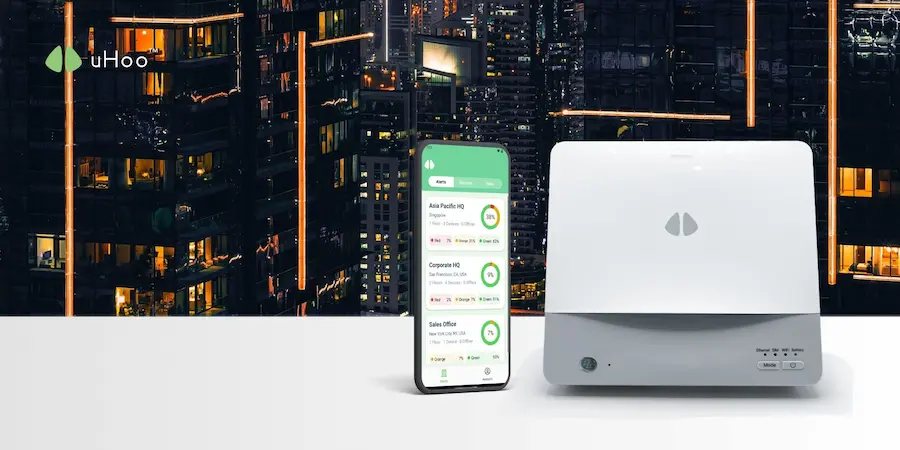
Solutions like uHoo Aura provide continuous monitoring of key air quality metrics, enabling organizations to align HVAC performance with real conditions.
By integrating IAQ into energy strategies, businesses can reduce costs, improve efficiency, and support more sustainable building operations.