
Sick Building Syndrome (SBS) is more than a health problem; it is a significant productivity killer that directly impacts a business’s bottom line. The array of non-specific symptoms (headaches, fatigue, difficulty concentrating, and general malaise) translates into measurable economic losses through decreased performance and increased absenteeism. Addressing SBS is, therefore, a strategic business decision that offers a compelling return on investment.
The cost to a company from a sick building environment manifests in two primary ways: presenteeism and absenteeism.
Presenteeism refers to employees coming to work while feeling unwell, resulting in impaired performance. Air quality issues like high carbon dioxide (CO2) levels are a direct cause of this. Studies have shown that elevated CO2 (a clear indicator of poor ventilation) significantly reduces cognitive function, decision-making ability, and concentration.
An employee suffering from a pollution-induced headache or mental fog is demonstrably less effective, leading to a loss of intellectual output and an increase in errors. When the workplace air is contaminated with Volatile Organic Compounds (VOCs) or mold spores, the chronic irritation of the respiratory system also diverts energy and focus away from work tasks, further diminishing productivity.
Absenteeism, the second cost, is driven by the respiratory illnesses and allergic reactions triggered by mold, dust, and other biological contaminants in the building’s air. Employees take sick days to recover from symptoms that are a direct result of the poor work environment. While this is less frequent than presenteeism, the cumulative impact of lost workdays, particularly across a large workforce, quickly becomes a major financial drain.
Beyond individual performance, a sick building environment damages employee morale and retention. A workplace that is visibly causing illness is not a pleasant place to be, leading to lower job satisfaction and a higher likelihood of employees seeking employment elsewhere. This churn adds to the hidden costs of recruitment and training.
Ultimately, the money saved on energy efficiency by tightly sealing a building is often dwarfed by the financial losses incurred through decreased productivity and health-related costs. Investing in air quality remediation is, therefore, an investment in human capital.
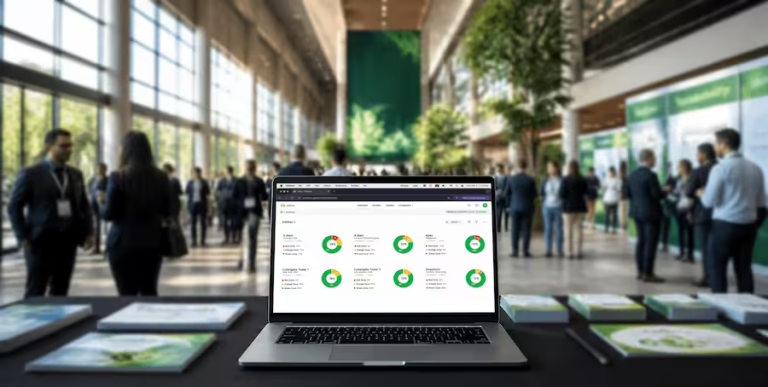
To calculate and justify this investment, businesses need continuous, objective data. The uHoo air quality monitor is the essential tool that can prove the link between environmental conditions and productivity losses.
With its comprehensive, original monitoring capabilities, uHoo can demonstrate a clear correlation: when CO2 levels spiked above 1,000 ppm, for example, the number of reported errors on a spreadsheet increased. By providing this kind of irrefutable evidence, uHoo helps building managers make the case that improving air quality is not an expense, but a strategic measure to eliminate a major productivity killer and immediately boost the bottom line.