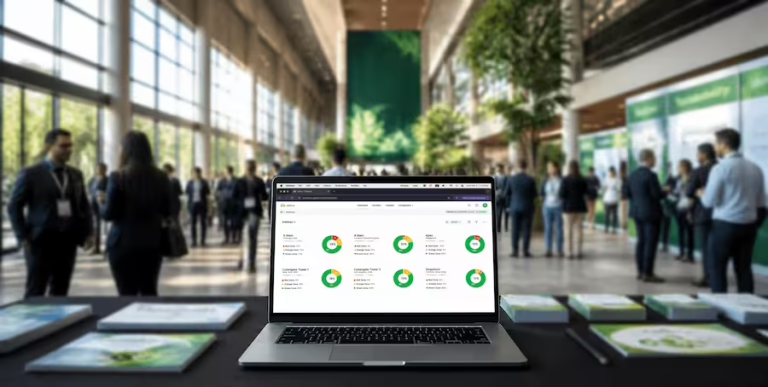

Indoor air quality management is evolving as organizations recognize that environmental conditions inside buildings are dynamic rather than static.
Many facilities still rely on spot testing or one-time inspections to evaluate air quality. While these methods provide useful information, they cannot fully capture how air behaves throughout the day.
This is where continuous air monitoring becomes a more reliable strategy for modern building management.
The limitation of one-time IAQ testing
One-time or periodic testing measures air quality only at the moment sampling occurs.
This approach can miss important variations caused by:
- Occupancy changes during meetings or peak hours
- HVAC cycling and ventilation adjustments
- Cleaning activities that release chemical compounds
- Weather-driven airflow changes
- Temperature and humidity fluctuations
Because indoor air conditions shift constantly, spot testing may fail to detect transient pollutant spikes.
Facilities may assume air quality is acceptable even when problems occur at other times of the day.
Why IAQ data should reflect real building behavior
Buildings are living systems.
Air quality inside commercial spaces changes based on human activity, mechanical performance, and environmental interaction.
Relying on limited measurements creates gaps in IAQ data, making it difficult to understand:
- Whether ventilation is performing consistently
- If pollutant sources are recurring
- Which zones experience higher exposure risk
- How air quality correlates with occupant complaints
Without continuous insight, decision-making becomes reactive rather than preventive.
How continuous monitoring improves facility management
Continuous air monitoring provides real-time visibility into environmental trends.
With ongoing measurement, organizations can:
- Detect CO₂ buildup during high occupancy periods
- Identify VOC spikes after maintenance or cleaning
- Monitor humidity to reduce mold risk
- Track airflow performance across spaces
- Respond immediately to abnormal readings
Instead of waiting for complaints or scheduled inspections, facility teams can address issues as they emerge.
Supporting workplace safety and operational efficiency
Indoor air quality directly influences employee comfort, cognitive performance, and health perception.
Maintaining stable environmental conditions supports:
- Reduced workplace complaints
- Better occupant satisfaction
- Lower absenteeism risk
- Improved productivity potential
- Stronger duty of care compliance
Continuous monitoring helps organizations align facility operations with occupant well-being objectives.
Building smarter facilities with environmental intelligence
Modern commercial buildings generate large amounts of operational data. Adding air quality information completes the picture of building performance.
Continuous monitoring transforms IAQ from an isolated facility concern into an integrated operational metric.
Solutions like uHoo Aura enable organizations to implement continuous air monitoring across commercial environments, providing actionable insights supported by real-time environmental data.
For facilities, workplaces, and shared spaces, moving beyond spot testing toward continuous IAQ management helps create safer, healthier, and more resilient indoor environments.