Multi-tenant buildings present a unique set of indoor air quality challenges. Unlike single-occupancy offices, these environments must support multiple organizations, each with different usage patterns, occupancy levels, and operational requirements.
Managing multi-tenant IAQ requires a more nuanced and data-driven approach, as air quality conditions are influenced by shared infrastructure and diverse tenant behavior.
Shared systems create shared risks
In most multi-tenant buildings, HVAC systems, ventilation pathways, and airflow distribution are shared across floors or zones.
This means:
- Air from one tenant space may influence another
- Ventilation performance must balance competing demands
- System inefficiencies can impact multiple occupants simultaneously
Without clear visibility, it becomes difficult to isolate and resolve air quality issues within specific tenant areas.
Occupancy patterns vary across tenants
Different tenants operate on different schedules and densities.
For example:
- One office may operate at full capacity daily
- Another may follow hybrid schedules
- Retail or service areas may experience peak traffic at specific times
These variations affect CO2 levels, airflow demand, and pollutant concentration, often unevenly across the building.
Airflow imbalance across zones
Because of varying usage, some areas may experience:
- Over-ventilation in low-occupancy zones
- Under-ventilation in high-density areas
- Inconsistent temperature and humidity control
These imbalances can lead to discomfort and inconsistent multi-tenant IAQ performance.
VOC sources differ between tenants
Each tenant may introduce different sources of VOCs into the building environment, including:
- Office equipment and furnishings
- Cleaning practices
- Industry-specific materials or processes
This diversity makes it difficult to standardize air quality without continuous monitoring.
Limited visibility complicates management
Facility managers often rely on centralized systems that provide limited, aggregated data.
This can make it difficult to:
- Identify which tenant area is affected
- Correlate complaints with environmental conditions
- Understand localized airflow or pollutant issues
Without granular insight, response efforts may be delayed or misdirected.
Why continuous monitoring is critical
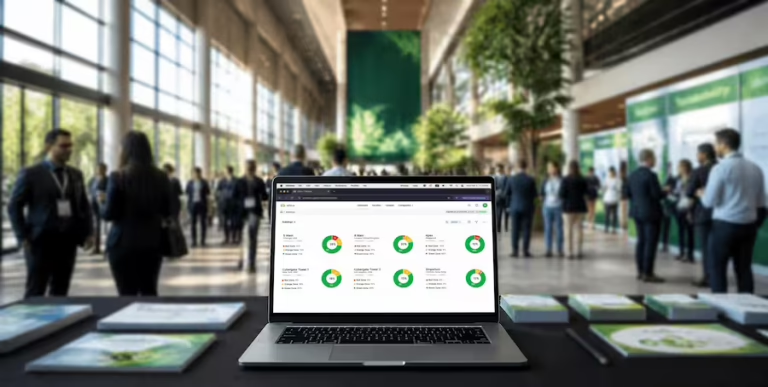
Managing multi-tenant IAQ effectively requires zone-level visibility and real-time data.
Solutions like uHoo Aura provide continuous monitoring across multiple indoor air parameters, allowing facility teams to:
- Track CO2 and occupancy-related patterns by area
- Detect VOC spikes linked to specific zones
- Identify airflow imbalances across floors
- Provide transparent reporting to tenants
With better insight, building managers can maintain healthier shared environments while supporting diverse tenant needs.