
We’ve all had that experience: you check into your hotel room, and something just doesn’t feel right. Maybe it’s a musty smell, a stuffy feeling, or an unidentifiable odor. This is often a sign of poor indoor air quality.
While hotels strive for cleanliness, the air inside these rooms can be a mix of invisible pollutants that can affect your health and well-being. Knowing what to look for and how to respond can make all the difference in your travel experience.
The term “hotel haze” perfectly captures this feeling: a cloud of stale air that can make you feel sluggish and unwell. This “haze” is a cocktail of various contaminants. The most common culprits are VOCs from cleaning agents, new carpets, and furniture. These can cause a range of symptoms, from headaches and dizziness to throat irritation.
Humidity also plays a significant role. If it’s too high, it can foster the growth of mold and mildew, which can be a major allergen. If it’s too low, it can lead to dry skin, a sore throat, and make you more susceptible to colds.
There are the allergens too. Hotels are high-traffic zones, and no matter how often they’re cleaned, dust mites, pet dander (from previous guests’ service animals), and pollen can get trapped in the carpets, drapes, and bedding. For someone with allergies or asthma, this can quickly turn a relaxing vacation into a miserable ordeal.
The hotel’s HVAC system is another variable. If the filters aren’t regularly changed, it can recirculate these allergens and other pollutants throughout the building. You might think you’re getting fresh, conditioned air, but you could be breathing in a concentrated dose of irritants.
Let’s not forget about CO2. In a poorly ventilated room, especially one that’s tightly sealed to maintain a specific temperature, CO2 levels can rise quickly. A high CO2 concentration can lead to that feeling of stuffiness and mental fog. It’s why you might feel tired even after a full night’s sleep. Your body isn’t getting the fresh, oxygenated air it needs to fully rest and recover. It’s a subtle but powerful factor that can impact your energy levels and mood for the entire day.
Navigating this unseen world of indoor air quality requires a proactive approach. You can’t rely on your senses alone, as many of the most dangerous pollutants are odorless and invisible. This is where a smart device can give you an edge. Instead of hoping for the best, you can empower yourself with real data. You can walk into a room, take a measurement, and know exactly what you’re dealing with.
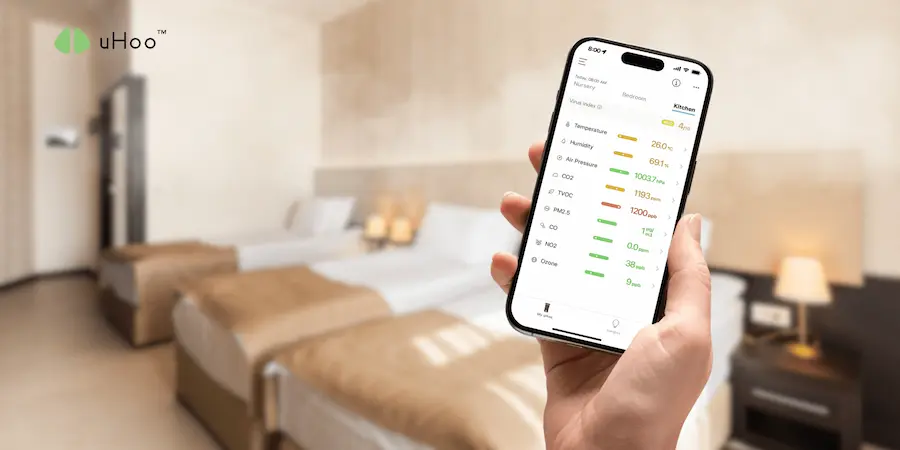
The uHoo air quality monitor is designed for exactly this purpose. It’s a small, portable device that measures nine different indoor air quality parameters, including temperature, humidity, VOCs, and CO2. You can set it up on the bedside table and let it go to work.
The uHoo app on your smartphone provides a real-time health score for your room. If you see a spike in VOCs, you know to open a window. If the humidity is too high, you can run the fan or adjust the thermostat. It gives you the information you need to make immediate changes and take control of your environment.
With uHoo, you can confidently navigate indoor air quality on the go, ensuring your hotel room is a true sanctuary, not a source of stress.