Many homeowners assume that when no one is inside the house, the indoor environment stays stable. In reality, indoor air continues to change even when the home is empty.
Understanding indoor air in empty home conditions can help homeowners recognize how environmental factors behave without daily human activity.
From humidity shifts to ventilation changes, indoor air quality can evolve while you are away.
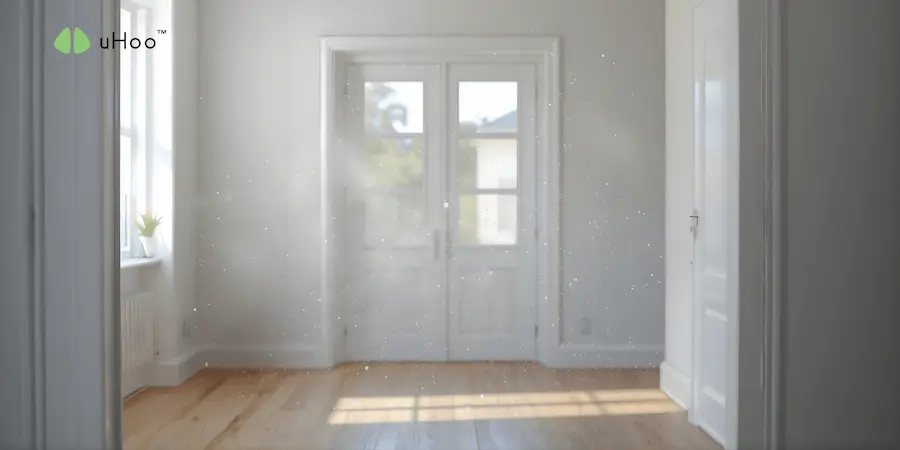
Air still moves even in an empty house
Even when a home is unoccupied, indoor air is not completely still.
Air exchange may continue through:
- Small gaps in doors and windows
- Ventilation systems or HVAC cycles
- Temperature differences between indoor and outdoor air
These factors can cause gradual changes in air composition, especially in homes that remain closed for extended periods.
Closed rooms may trap pollutants
When homes remain sealed for days or weeks, closed rooms may accumulate indoor pollutants.
Potential sources include:
- Residual cleaning chemicals
- Off-gassing from furniture and building materials
- Dust buildup from indoor surfaces
- Trapped humidity in bathrooms or kitchens
Without daily ventilation, these substances may linger longer in the indoor environment.
Humidity can shift unexpectedly
Humidity levels can change significantly while homeowners are away.
For example:
- Rainy weather may increase indoor moisture
- Air conditioning shutdowns may raise indoor humidity
- Poor airflow may allow damp air to accumulate
Excess humidity can increase the likelihood of mold growth, particularly in storage areas, bathrooms, or basements.
Temperature fluctuations affect air conditions
Temperature changes influence how air behaves inside the home.
If HVAC systems are turned off or reduced while homeowners are away, temperature differences between rooms may develop.
These fluctuations can contribute to:
- Condensation buildup in certain areas
- Reduced air circulation
- Changes in pollutant concentration
Even without occupants, environmental conditions continue to evolve.
Why indoor air quality still matters in empty homes
Monitoring indoor air conditions while away can help prevent potential issues that develop unnoticed.
Environmental awareness helps homeowners:
- Identify humidity spikes early
- Maintain balanced airflow
- Prevent stale air buildup
- Detect potential mold risk conditions
Maintaining stable indoor conditions protects both home comfort and long-term property maintenance.
Keeping an eye on your indoor environment
Indoor air does not pause when your home is empty. It continues responding to weather patterns, ventilation changes, and building materials.
Tools like uHoo help homeowners stay aware of indoor air conditions by providing continuous monitoring and real-time environmental insight.
With better visibility into your indoor environment, you can ensure your home remains comfortable and well-balanced even when no one is there.