
Summer brings glorious sunshine and warmth, but often, it also ushers in a less welcome guest: heat-driven ozone pollution.
Ground-level ozone, commonly known as smog, forms much more readily on hot, sunny days when pollutants react in the atmosphere. This invisible gas is a potent respiratory irritant, capable of causing coughing, shortness of breath, throat irritation, and even chest pain.
It’s particularly harmful for vulnerable groups like children, the elderly, and individuals with asthma or other pre-existing respiratory conditions. So, how can you effectively shield yourself and your loved ones from its pervasive effects?
Here are essential, practical tips to proactively protect yourself from heat-driven ozone:
- Stay Informed with Comprehensive Air Quality Alerts: This is your foundational defense strategy for heat-driven ozone. Before you plan your day, especially during warmer months, make it a habit to check local air quality forecasts. Many weather apps and local government environmental sites provide hourly updates on air quality, including ozone levels.Your uHoo app can often integrate with local data sources, giving you convenient access to this crucial information directly on your phone. Knowing when ozone is predicted to be high allows you to make informed decisions about your daily activities.
- Limit Strenuous Outdoor Activity During Peak Ozone Hours: Ozone concentrations are typically at their highest in the afternoon and early evening (generally between 1 PM and 7 PM). During these hours, the sun’s intensity is greatest, accelerating the chemical reactions that form ozone. If local ozone levels are high, it’s best to reschedule any vigorous outdoor activities – like running, cycling, or yard work – for the early morning or late evening when ozone levels have dropped. For children, encourage indoor play or less strenuous outdoor activities on high-ozone days.
- Keep Your Indoors Sealed and Cooled: When outdoor ozone is high, your home can be your sanctuary, but only if properly sealed. Keep all windows and doors firmly closed. Ensure that window and door frames are well-sealed, as even small gaps can allow ozone to infiltrate. Running your air conditioning (AC) system serves a dual purpose: it keeps your home comfortably cool and, crucially, it helps filter outdoor air as it recirculates indoor air. Make sure your AC filters are clean and regularly changed to optimize their effectiveness.
- Scrutinize Your Indoor Products: Avoid Ozone-Generating Devices: This is a less obvious but important point. While most ozone pollution comes from outdoors, some indoor devices can directly emit ozone. Be particularly cautious of “air purifiers” that claim to work by ionization or by emitting ozone – these devices directly add a harmful pollutant to your indoor air and should be avoided. Also, older laser printers and photocopiers, especially in poorly ventilated areas, can sometimes release small amounts of ozone. If you use such devices, ensure adequate ventilation, but only when outdoor ozone levels are low.
- Reduce Your Personal Contribution to Ozone Precursors: While focusing on personal protection, consider how your actions contribute to the broader problem. Reduce your vehicle use by carpooling, using public transportation, cycling, or walking on high-ozone days. If you must refuel your car, do so in the evening when temperatures are cooler to minimize the evaporation of gasoline vapors, which are key precursors to ozone formation. Also, choose low-VOC paints and household cleaners.
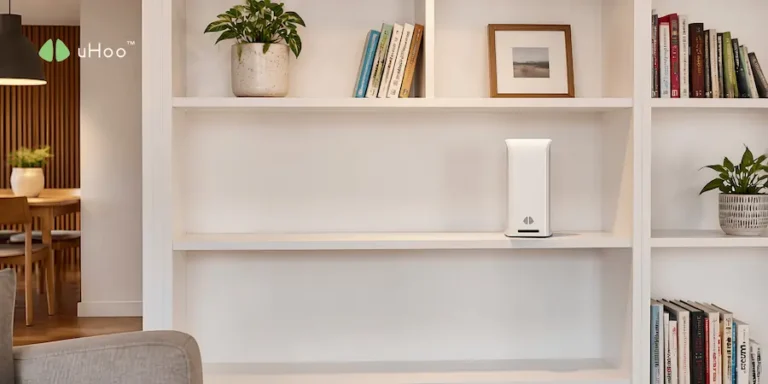
- Utilize Your uHoo Monitor for Real-Time Validation: Your uHoo air quality monitor is an invaluable tool for direct insight. While ozone largely originates outdoors, uHoo can provide real-time data on indoor ozone levels. If outdoor ozone is high and you’ve implemented protective measures (like sealing your home), your uHoo can confirm if your indoor environment remains safe. If you see elevated indoor ozone, it’s a clear signal to double-check your sealing, ventilate more strategically (when outdoor conditions allow), or activate your HVAC. This continuous feedback loop empowers you to effectively protect yourself from heat-driven ozone.
By understanding how heat-driven ozone forms and consistently implementing these practical precautions, you can significantly reduce your exposure and safeguard your respiratory health and overall well-being, allowing you to enjoy summer more safely.