
Many people assume that indoor air stays stable while they sleep. Windows are closed, lights are off, and activity in the home slows down. But in reality, indoor air quality can change significantly overnight, especially in bedrooms.
Because people spend 6 to 8 hours sleeping in the same room, overnight conditions can quietly influence comfort, sleep quality, and how you feel the next morning.
Understanding overnight IAQ helps reveal what happens to the air in your home while you rest.
CO2 levels naturally rise while you sleep
One of the most common overnight air changes is the buildup of CO2 in the bedroom.
Carbon dioxide increases whenever people breathe in enclosed spaces. During sleep, this buildup happens gradually, especially when:
- Bedroom doors are closed
- Windows remain shut
- Ventilation is limited
- Multiple people share the same room
As the night progresses, CO2 concentrations may steadily increase, contributing to feelings of grogginess or fatigue upon waking.
Temperature shifts throughout the night
Indoor temperature often fluctuates overnight as heating or cooling systems cycle on and off.
Temperature changes may occur because:
- HVAC systems adjust during scheduled nighttime settings
- Outdoor temperatures drop or rise overnight
- Air circulation decreases in closed rooms
These shifts can affect both comfort and sleep quality, particularly if the bedroom becomes too warm or too cold.
Humidity may increase overnight
Humidity can also change while you sleep.
Because people exhale moisture when breathing, enclosed bedrooms can slowly accumulate humidity overnight. This effect becomes more noticeable when:
- The room has limited airflow
- Bathrooms nearby release steam
- Humid climates keep moisture levels high
Over time, elevated humidity may contribute to stuffy air or increased mold risk in poorly ventilated rooms.
Airflow often becomes restricted
Bedrooms are commonly isolated spaces within a home. Closed doors and limited ventilation can reduce airflow.
This restricted airflow may allow indoor pollutants to linger longer, including:
- CO2 from breathing
- VOCs from furniture or fabrics
- Particles from bedding or dust
Because these changes occur gradually, they are rarely noticeable in the moment.
Why overnight air patterns are easy to miss
Most people are asleep during the hours when these air quality changes occur. As a result, it is difficult to observe how indoor conditions evolve throughout the night.
Morning symptoms like headaches, fatigue, or stuffy air may actually reflect overnight environmental changes that happened while you were sleeping.
Understanding overnight IAQ patterns helps explain why some mornings feel more refreshing than others.
Gaining visibility into overnight air conditions
Tracking air quality continuously can help homeowners understand what happens in their homes at night.
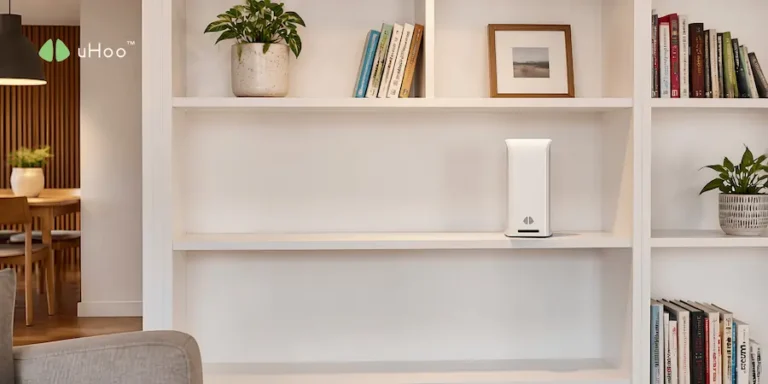
Solutions like uHoo monitor indoor air factors such as CO2, temperature, and humidity, providing insight into how bedroom environments change overnight.
By understanding these overnight patterns, homeowners can make simple adjustments to ventilation, airflow, and indoor conditions, helping create a more comfortable and healthier sleeping environment.