The most elegant and permanent solution to airborne mold is to choose materials that make your home uninhabitable for fungi, a strategy best described as starving mold to preserve air quality. Mold spores are microscopic and unavoidable, but they only become a health threat when they land on a wet surface that provides them with a food source. By removing this food source during renovation or construction, you create a biologically inert structure, achieving a long-term defense against respiratory irritants.
Mold’s preferred food is cellulose, the primary organic compound found in wood, paper, cotton, and many common building adhesives. To starve mold, you must systematically substitute these cellulose-rich materials with inorganic alternatives that mold cannot digest.
Key material substitutions that starve mold include:
- Replacing Paper with Fiberglass or Cement: The number one offender is paper-faced drywall. Substituting it with fiberglass-faced drywall (which uses a non-organic matting) or cement backer board (which is entirely inorganic) in all wet or damp-prone areas immediately removes a vast amount of potential food.
- Inorganic Insulation: Swapping traditional paper-backed fiberglass batts for mineral wool or closed-cell spray foam achieves two goals: insulation and mold starvation. Mineral wool is made from non-organic stone and slag fibers, while spray foam is a dense plastic. Neither offers any nutritional value to mold spores, even if they become damp.
- Non-Porous Finish Surfaces: Choosing flooring like ceramic, porcelain, or stone tile over carpet or porous wood floors for bathrooms and basements is crucial. These materials are non-porous and easy to clean, preventing the accumulation of the organic dust and moisture films that mold uses as a food source.
- Treated Lumber: Where wood must be used in contact with concrete or in high-moisture areas (like framing for a basement wall), pressure-treated lumber is essential. The chemical treatment resists fungal decay, ensuring the core structure remains biologically resistant.
This material-based starvation strategy is the ultimate proactive defense for preserving air quality. By structurally eliminating mold’s food source, you ensure that the millions of spores that inevitably enter your home never have the chance to germinate into an active colony that releases allergenic and toxic particles. This significantly reduces the respiratory burden on the occupants, translating directly to fewer allergy symptoms and a decreased risk of asthma flare-ups.
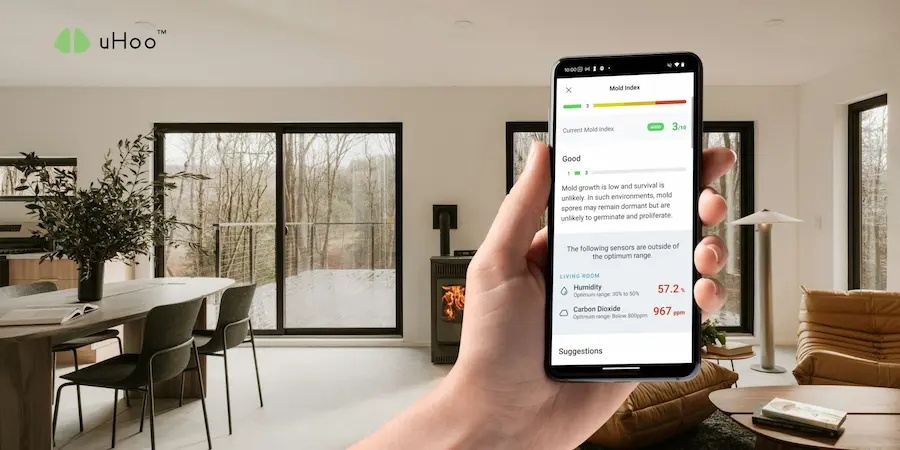
However, even the most mold-starving materials can be defeated by unchecked moisture. For instance, a persistent leak or excessive, chronic humidity can allow mold to grow on the layer of dust on top of a mold-resistant surface. This highlights the need for continuous environmental awareness. The uHoo air quality monitor provides an original and essential safeguard by featuring its uHoo Mold Index.
This index continuously analyzes the air’s conditions and provides an actionable risk score that tells you when the relative humidity is rising to a critical point. By tracking this information, you are empowered to turn on a dehumidifier or improve ventilation, ensuring that the environmental conditions never get wet enough to allow mold to bypass your material defenses and threaten your air quality.