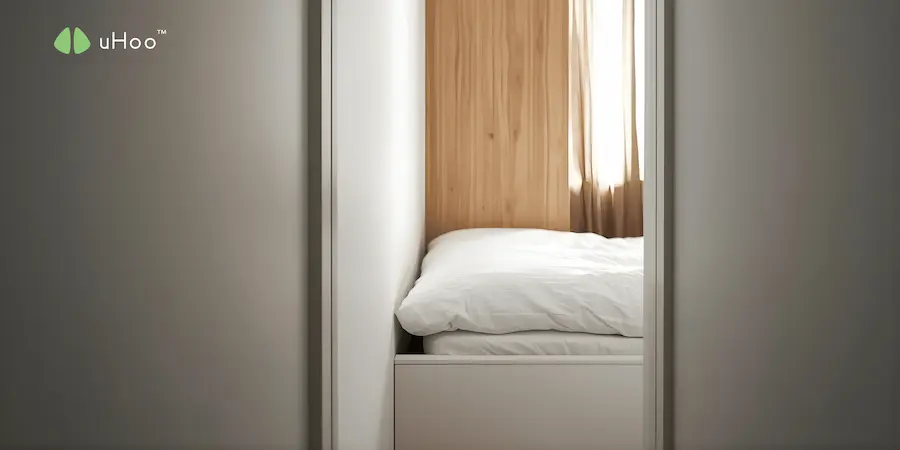
Not all spaces in your home behave the same way. Smaller rooms often experience faster changes in air quality compared to larger, open areas.
Understanding small room IAQ helps explain why certain spaces may feel stuffy or uncomfortable more quickly.
Limited space means faster buildup
In smaller rooms, there is less air volume available to dilute pollutants.
This means:
- CO2 buildup occurs more quickly
- Pollutants become more concentrated
- Air conditions change faster
Even a short period of occupancy can significantly affect indoor air.
Ventilation is often restricted
Small rooms may have limited airflow due to:
- Fewer windows
- Closed doors
- Limited HVAC circulation
Without proper ventilation, fresh air exchange is reduced, allowing pollutants to accumulate.
Everyday activities have a bigger impact
Simple activities can influence air quality more in small spaces.
For example:
- Working in a closed bedroom raises CO2 levels
- Using cleaning products increases VOC concentration
- Sleeping overnight affects airflow and air freshness
These changes are more noticeable due to the confined environment.
Why monitoring small spaces matters
Because small rooms react quickly to environmental changes, they benefit from closer observation.
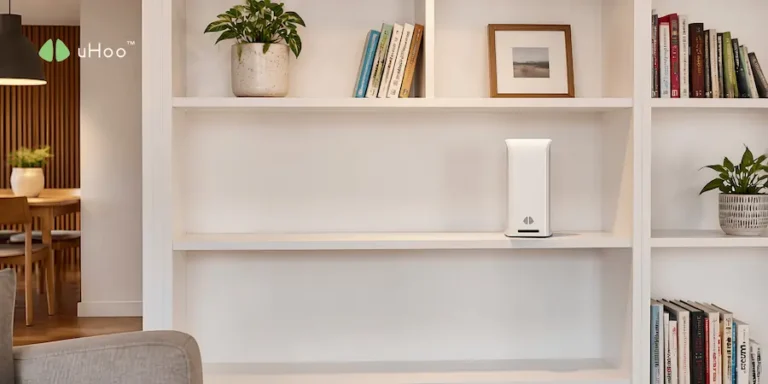
Tools like uHoo Caeli help track air conditions in real time, allowing homeowners to detect changes in CO2, airflow, and pollutant levels.
With better insight, it becomes easier to manage small room IAQ and maintain more comfortable indoor spaces.