
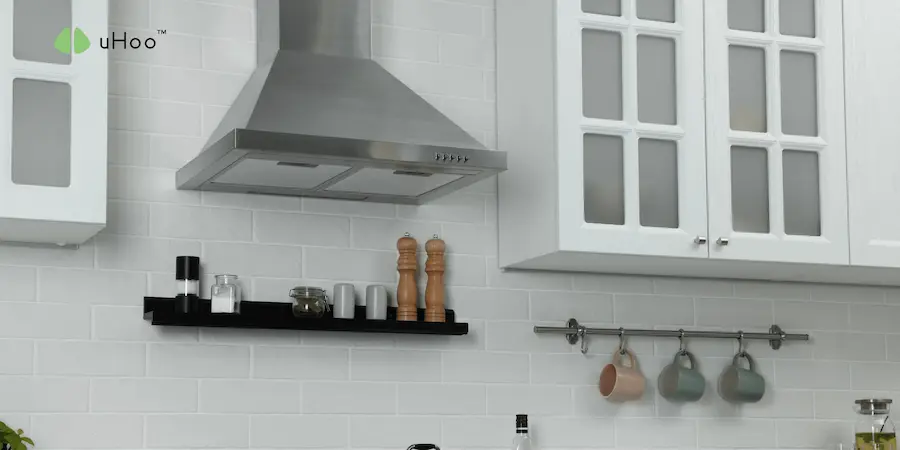
Ensuring your range hood operates at its peak performance is essential for maintaining clean kitchen air and protecting your home from grease and odor migration. Hood performance depends on consistent attention to the components that govern airflow and filtration. Neglecting any of these areas will rapidly degrade the hood’s ability to clear the air, necessitating a proactive, multi-step maintenance plan.
Here are the essential steps for peak range hood performance:
- Routine Filter Cleaning (Monthly): This is the single most important step. The grease filter is the primary bottleneck for airflow. For standard mesh filters, remove and wash them every month or as soon as grease buildup is visible. Use a strong degreaser or run them through a dishwasher cycle. Saturated filters are the number one killer of performance.
- Charcoal Filter Replacement (3-6 Months): If you have a ductless (recirculating) hood, it uses charcoal filters to absorb odors and smoke. These filters cannot be washed and must be replaced on schedule, typically every 3 to 6 months, depending on cooking frequency. Once saturated, they provide no benefit and severely restrict airflow.
- Fan Blade Degreasing (Semi-Annually): Turn off the power at the breaker and visually inspect the fan blades. Grease buildup on the fan blades not only reduces the fan’s efficiency by increasing its weight but also throws it out of balance, leading to excessive noise and vibration. Carefully clean the blades and fan housing using a degreaser.
- Ductwork Inspection (Annually or Biannually): For ducted hoods, a blocked or partially obstructed duct can drastically reduce performance. Check the exterior vent cover for bird nests, debris, or excessive grease buildup that can impede exhaust. Ensure the duct run is as short and straight as possible to maximize airflow.
- Surface and Canopy Wiping (Weekly): Wipe the visible surfaces and canopy of the hood weekly with a mild degreaser. This prevents the initial, thin layer of sticky grease from hardening, which makes deeper cleaning difficult and allows the grease to attract household dust.
Adhering to these steps ensures that the range hood operates at its maximum Cubic Feet per Minute (CFM) capacity, effectively capturing and removing fine particulate matter, grease, and gases like nitrogen dioxide from your kitchen air.
To confirm that your maintenance is delivering peak performance, an objective air quality measure is indispensable. The uHoo air quality monitor offers an original way to test your hood’s effectiveness after each maintenance session. By tracking the concentration of fine particulate matter (PM2.5) during cooking, uHoo can provide a quantifiable performance report. If your PM2.5 spikes remain low, you know your hood is at peak condition. If they rise, uHoo acts as a smart diagnostic tool, signaling that one of the essential steps has been neglected or that a deeper issue, like a duct problem, needs to be addressed.