
Beyond facilities: a people-centered concern
Indoor air quality is often viewed as a facilities or operations responsibility. HVAC systems, ventilation rates, and building maintenance typically fall under technical teams.
However, workplace air quality health directly affects the people inside the building — making it just as relevant to Human Resources.
Because HR leaders are responsible for employee well-being, engagement, and retention, indoor air quality should be part of the broader employee wellness conversation.
The connection between air and employee wellness
Employees spend a significant portion of their day indoors. When air quality is poor, it can influence how they feel, think, and perform.
Common IAQ-related concerns include:
- Headaches and fatigue
- Difficulty concentrating
- Respiratory irritation
- Allergy flare-ups
- General discomfort
These symptoms may not always be dramatic, but over time, the IAQ impact on productivity and morale can be substantial.
For HR teams focused on employee wellness, ignoring environmental factors leaves a critical gap.
Air quality and workplace experience
Organizations invest heavily in culture, engagement programs, and office design to improve employee experience.
Yet even the most thoughtfully designed workspace can fall short if air conditions undermine comfort.
When employees feel stuffy meeting rooms, inconsistent temperatures, or recurring discomfort, it shapes their perception of the workplace.
Air quality plays a silent but powerful role in how employees experience the office.
Return-to-office and employee confidence
In hybrid and return-to-office environments, employee trust is essential.
Workers want assurance that their workplace is safe and supportive of their health. Transparent air quality practices can strengthen that trust.
When organizations proactively address workplace air quality health, they demonstrate care, accountability, and commitment to employee well-being.
Absenteeism and productivity considerations
Poor air conditions can contribute to increased sick days and reduced cognitive performance.
Elevated carbon dioxide levels, inadequate ventilation, and indoor pollutants may affect focus and energy levels, directly influencing productivity.
For HR leaders tracking engagement metrics and absentee trends, IAQ data can provide valuable context.
Compliance and duty of care
HR departments are often involved in workplace safety policies and compliance oversight.
Indoor air quality intersects with:
- Occupational health standards
- Workplace safety reporting
- Employee grievance handling
- Wellness initiatives
Proactively managing IAQ supports an organization’s duty of care and helps reduce risk related to unresolved complaints.
Why HR should collaborate with facilities
Air quality management is most effective when HR and facilities teams collaborate.
HR can:
- Surface employee concerns
- Identify patterns in wellness feedback
- Integrate IAQ into wellbeing programs
- Communicate environmental initiatives transparently
Facilities teams can provide the environmental data needed to validate and address concerns.
Together, they create a more holistic approach to workplace health.
Bringing visibility to workplace air
Objective measurement bridges the gap between employee perception and operational response.
Continuous monitoring allows organizations to:
- Track environmental conditions in real time
- Correlate complaints with measurable data
- Identify high-risk zones
- Provide transparent reporting to leadership and staff
This evidence-based approach strengthens both employee wellness strategies and risk management efforts.
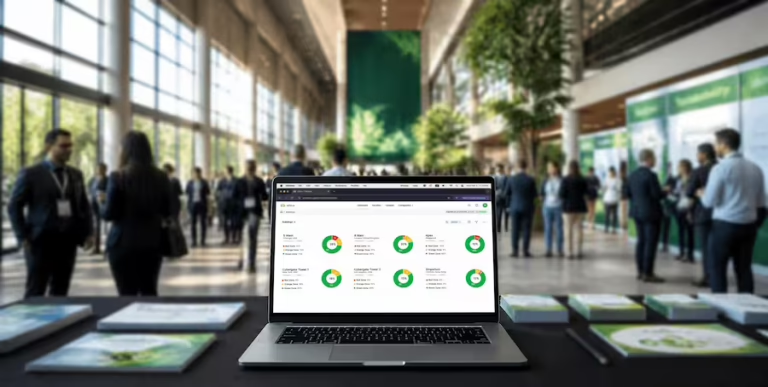
Solutions like uHoo Aura support workplace teams with continuous air quality monitoring across multiple parameters, helping organizations better understand and manage the IAQ impact on employee health.
By recognizing that air quality is not just a facilities issue but a human resources priority, businesses can create healthier, more resilient workplaces grounded in measurable environmental insight.