
Why indoor air quality matters in high-occupancy spaces
Schools, clinics, and other shared facilities serve vulnerable populations every day. Students, patients, healthcare workers, and staff spend extended hours indoors, making air quality a critical operational priority.
Managing IAQ in commercial buildings is not only about comfort. In environments where health, concentration, and safety are essential, indoor air conditions directly influence outcomes.
For administrators and facility managers, proactive IAQ oversight supports both well-being and performance.
Unique IAQ challenges in schools
Educational environments face distinct air quality pressures.
Classrooms often experience:
- High occupant density
- Limited window ventilation
- Extended periods of closed-door instruction
- Increased CO2 during lessons
Elevated carbon dioxide can affect concentration and cognitive function, while inadequate ventilation may allow pollutants to accumulate.
Because students rotate between rooms, air conditions can fluctuate significantly throughout the day.
Healthcare air quality considerations
Clinics and outpatient facilities present even higher stakes.
Effective healthcare air quality management requires attention to:
- Ventilation performance
- Humidity control
- Particulate filtration
- VOC exposure from cleaning agents
In medical environments, poor air conditions may influence patient comfort, infection control protocols, and staff well-being.
Air quality must be monitored consistently to maintain safe indoor environments.
Shared facility complexities
Beyond schools and clinics, other commercial facilities, such as community centers and administrative buildings, also face IAQ challenges.
Common factors include:
- Variable occupancy patterns
- Aging HVAC systems
- Seasonal humidity shifts
- Limited mechanical ventilation in older structures
Because these buildings serve diverse populations, maintaining balanced air conditions becomes more complex.
The impact of poor IAQ
When IAQ is not actively managed, organizations may experience:
- Increased complaints from staff or occupants
- Reduced productivity or focus
- Greater absenteeism
- Higher operational strain on HVAC systems
In schools and healthcare settings, these impacts carry both health and reputational implications.
Why periodic testing isn’t enough
Many facilities rely on occasional inspections or reactive testing after complaints arise.
However, indoor air conditions change throughout the day due to occupancy levels, weather conditions, and daily activities.
Without continuous visibility, short-term spikes in CO2, humidity, or VOCs may go undetected.
Managing IAQ in commercial buildings requires ongoing oversight rather than one-time assessments.
The role of continuous air monitoring
Continuous monitoring enables facility managers to:
- Track ventilation effectiveness
- Detect pollutant spikes in real time
- Monitor humidity to reduce mold risk
- Identify high-risk zones
- Support compliance documentation
Data-driven insights allow administrators to respond proactively instead of reactively.
Creating healthier learning and care environments
Maintaining healthy indoor air in schools and clinics supports better learning outcomes, improved patient comfort, and stronger staff confidence.
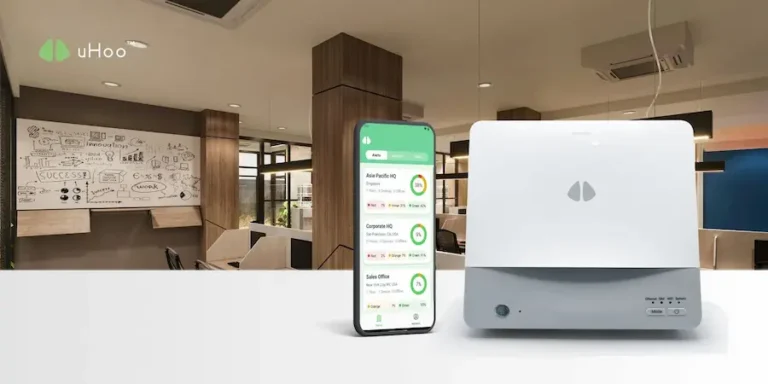
Solutions like uHoo Aura provide continuous environmental monitoring across key air quality parameters, helping organizations manage IAQ in commercial buildings with measurable, real-time insight.
By integrating IAQ monitoring into facility management strategies, schools, healthcare clinics, and shared facilities can create safer, more resilient indoor environments that protect the people who rely on them every day.