
Wildfires are becoming more frequent and more intense across North America. Even if you live far from an active wildfire, the smoke can still reach your community, affecting the air you breathe both outdoors and indoors.
Many people are surprised to learn that they can experience poor indoor air quality despite never seeing flames nearby. Fine smoke particles can travel long distances with changing weather patterns, making wildfire smoke a concern for millions of people across the United States and Canada each year.
Understanding how smoke enters your home is the first step toward protecting your indoor environment.
How Far Can Wildfire Smoke Travel?
Wildfire smoke is made up of tiny particles and gases that can remain suspended in the atmosphere for days. Depending on wind patterns and weather conditions, smoke can travel hundreds or even thousands of miles from the original fire.
This is why cities located far from wildfires can still experience hazy skies, air quality alerts, and elevated pollution levels.
Even when outdoor conditions appear normal, fine particles may still be present in the air.
How Does Smoke Get Inside Your Home?
Your home is not completely sealed from the outdoors.
Wildfire smoke can enter through:
- Open windows and doors
- HVAC and ventilation systems
- Small cracks around windows
- Gaps under doors
- Bathroom and kitchen exhaust systems
- Attics and crawl spaces
Once smoke enters, the smallest particles can remain suspended indoors for extended periods, especially if ventilation is limited.
Why PM2.5 Matters During Wildfires
One of the biggest concerns during wildfire season is PM2.5.
PM2.5 refers to particulate matter that measures 2.5 micrometers or smaller. Because these particles are extremely small, they can travel deep into the lungs and may even enter the bloodstream.
High levels of PM2.5 have been linked to:
- Respiratory irritation
- Asthma flare-ups
- Reduced lung function
- Eye irritation
- Increased cardiovascular stress
Monitoring PM2.5 indoors helps you understand whether wildfire smoke is affecting your living space.
Your Indoor Air Can Change Throughout the Day
Indoor air quality is not static.
Smoke levels inside your home may change as:
- Outdoor wind conditions shift
- Doors are opened
- HVAC systems cycle on and off
- Family members enter and leave the house
- Air purifiers are turned on or off
Without continuous monitoring, these changes often go unnoticed until symptoms begin.
How to Reduce Smoke Indoors
There are several practical ways to reduce your exposure to wildfire smoke indoors.
Keep windows and doors closed when outdoor air quality is poor.
Use high-efficiency HVAC filters that are compatible with your system.
Run portable HEPA air purifiers in the rooms you use most.
Avoid activities that create additional indoor particles, including smoking, burning candles, and excessive frying or grilling.
Most importantly, monitor your indoor air so you know whether these actions are actually improving your environment.
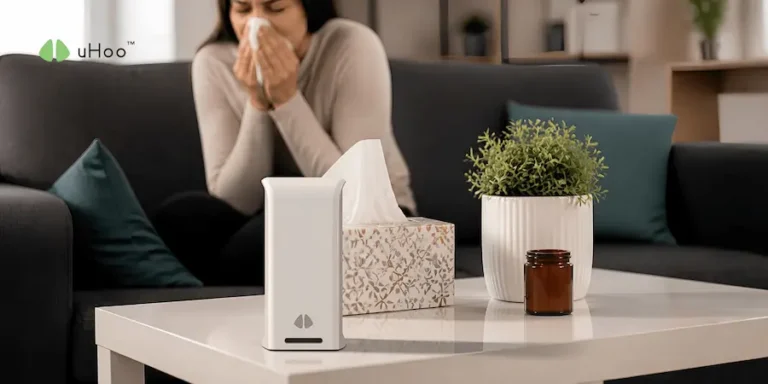
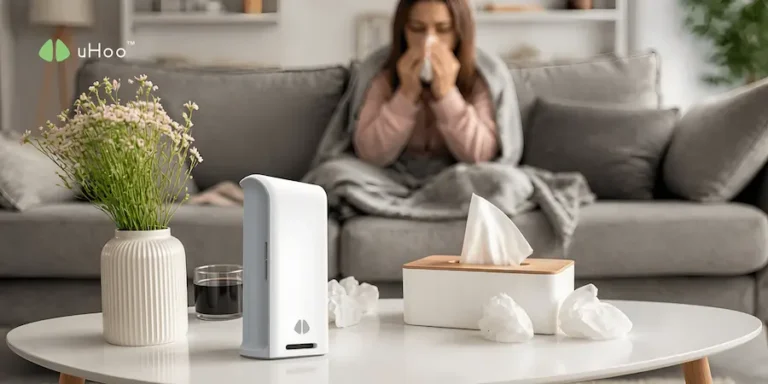
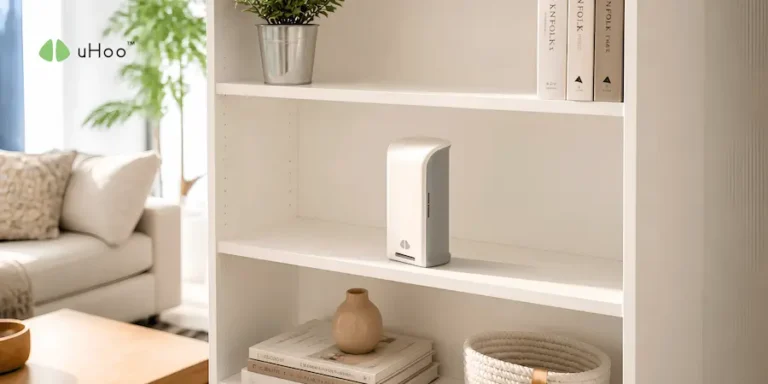
The uHoo Caeli provides real-time insight into your indoor air quality, helping you understand how wildfire smoke is affecting your home.
Why Indoor Air Monitoring Makes a Difference
Outdoor air quality reports tell you what is happening across a city or region.
They cannot tell you what is happening inside your own home.
Every building is different. Factors such as insulation, filtration, ventilation, and occupancy all influence indoor air quality.
Real-time monitoring helps you make informed decisions instead of relying on assumptions.
With uHoo, you can continuously monitor:
- PM2.5
- Carbon dioxide
- Temperature
- Humidity
- Volatile organic compounds (VOCs)
- Carbon monoxide
- Nitrogen dioxide
- Ozone
- Air pressure
- Airborne mold risk
These insights help homeowners understand when indoor air quality begins to decline and whether corrective actions are working.
Protect Your Home Before Smoke Becomes a Problem
Wildfire smoke is no longer only a concern for communities located near active fires.
Changing weather patterns allow smoke to travel across states and provinces, affecting indoor air quality far from the source.
By understanding how smoke enters your home and monitoring your indoor environment, you can take proactive steps to reduce exposure and create a healthier space for your family.
Whether wildfire smoke lasts for a day or several weeks, knowing what is happening indoors helps you respond with confidence.
Learn how the uHoo Caeli can help you monitor your indoor air in real time and make smarter decisions during wildfire season.