
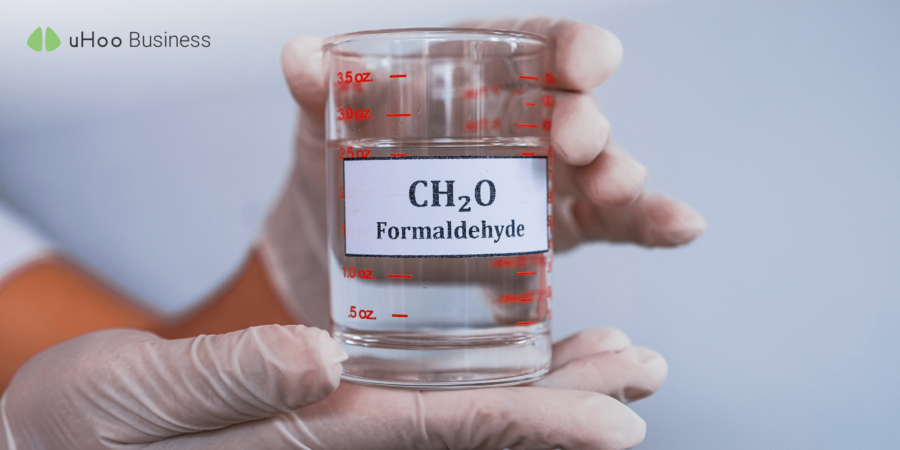
Have you ever walked into a freshly renovated room and noticed that distinct “new home” scent? We often associate this smell with freshness, but it is frequently the result of off-gassing from formaldehyde, a colorless gas released by building materials, glues, and even new furniture. While the name might remind you of high school biology class, formaldehyde is far more than just a lab preservative. It is one of the most prevalent Volatile Organic Compounds (VOCs) found in modern indoor environments. Surprisingly, this invisible chemical is naturally occurring, produced by your own body and found in fruits like apples and bananas, but it also hides in everyday items like “wrinkle-free” clothing and cosmetics.
Despite being natural, formaldehyde is classified as a Group 1 carcinogen, meaning long-term exposure to high levels poses serious health risks. Because it can be odorless at lower (yet harmful) concentrations, relying on your nose alone is not enough to ensure your family’s safety. Understanding how factors like heat and humidity increase off-gassing is critical to maintaining a healthy home environment. To help you demystify this ubiquitous compound, we have compiled the most crucial facts you need to know to identify hidden sources and manage them effectively.
To help you better understand this ubiquitous compound and how to manage it, we have compiled the most interesting and crucial facts about formaldehyde.
1. Formaldehyde is Naturally Occurring (Even in You!)
While often villainized as a toxic industrial chemical, formaldehyde is actually a naturally occurring organic compound. It is produced by every living organism, including humans, as a by-product of normal metabolic processes. Your body produces about 1.5 ounces of it daily to help metabolize certain amino acids. However, our bodies are designed to break it down quickly, so it doesn’t accumulate to dangerous levels naturally.
2. High Formaldehyde Levels in Fruit
This is one of the most surprising facts for many: formaldehyde is found naturally in many fruits and vegetables. Foods like bananas, pears, apples, grapes, and spinach contain small amounts of the compound. Unlike industrial exposure, the levels found in fresh food are generally not harmful because they are bound within the food’s structure and consumed in small quantities.
3. The “New Home” Smell is Often Formaldehyde
We often associate the smell of a new home or new furniture with “freshness,” but that distinct scent is actually the result of off-gassing. Building materials like pressed wood (plywood, particleboard), glues, adhesives, and insulation often release significant amounts of formaldehyde gas when they are new. This process can continue for months or even years, contributing to poor indoor air quality.
4. Heat and Humidity Increase Off-gassing
Formaldehyde does not just sit there; its behavior changes with environmental conditions. Studies show that off-gassing rates increase significantly with higher temperatures and humidity. If your home is warm and damp, the furniture and building materials around you may release formaldehyde at a much faster rate than in a cool, dry room. Maintaining proper ventilation and humidity control (ideally between 40-60%) is key to keeping levels low.
5. It Hides in “Wrinkle-Free” Clothing
Love the convenience of wrinkle-free shirts? You might be wearing formaldehyde. The chemical is frequently used in the textile industry to treat fabrics, making them crease-resistant, stain-resistant, and durable. To reduce exposure, it is highly recommended to wash all permanent-press clothing and bedding before using them for the first time.
6. It Is a Known Carcinogen
This is the serious side of the coin. Formaldehyde is classified as a Group 1 carcinogen, meaning it is known to cause cancer in humans. Long-term exposure to high levels has been linked to nasopharyngeal cancer and leukemia. This is why regulatory bodies set strict limits on exposure levels in workplaces.
7. Smokers Are at Double the Risk
Cigarette smoke is a major source of indoor formaldehyde pollution. Both active smokers and those exposed to secondhand smoke inhale formaldehyde. This contributes to the “stale” odor associated with smoking indoors and significantly increases the toxic load on the respiratory system.
8. It Is Colorless But Not Odorless
Formaldehyde is a colorless, flammable gas at room temperature. While you cannot see it, you can certainly smell it at high concentrations, it has a sharp, pungent odor. However, at lower (but still potentially harmful) levels, it may be undetectable to the human nose, which is why relying on smell alone is not a safe strategy.
9. Cosmetics Can Release It
Check your bathroom cabinet. Some preservatives used in cosmetics, such as shampoos, lotions, and shower gels, are known as “formaldehyde releasers.” Ingredients like quaternium-15 and DMDM hydantoin slowly release small amounts of formaldehyde over time to prevent bacteria growth in the product. While effective for preservation, they add to your daily chemical exposure.
10. Measuring It is the Only Way to Be Sure
Because formaldehyde can be present without a strong smell and comes from so many sources (furniture, cooking, cleaning products), the only way to know if your indoor environment is safe is to measure it.
Professional monitoring devices track formaldehyde levels in real-time. This data allows you to “see” the invisible and take action, whether that’s opening a window, turning on an air purifier, or removing a specific pollutant source.
How to Manage Formaldehyde at Home
- Ventilate: Open windows regularly to dilute indoor pollutants with fresh outdoor air.
- Choose “No-Added-Formaldehyde” (NAF) Products: Look for this label when buying furniture or wood products.
- Control Climate: Keep your home cool and dry to slow down off-gassing.
- Monitor: Use a smart air monitor to keep an eye on your VOC and formaldehyde levels 24/7.

Frequently Asked Questions (FAQs)
Q: Can air purifiers remove formaldehyde? A: Yes, but not all of them. Look for air purifiers equipped with activated carbon filters, which are designed to adsorb volatile chemicals like formaldehyde. Standard HEPA filters only trap dust and particles, not gases.
Q: How long does it take for new furniture to stop off-gassing? A: It varies significantly. While the strongest emissions often occur in the first few months, pressed wood products can continue to off-gas lower levels of formaldehyde for several years.
Q: What are the symptoms of formaldehyde exposure? A: Common symptoms include watery or burning eyes, throat irritation, coughing, wheezing, nausea, and skin irritation. If you notice these symptoms improve when you leave the house, indoor air quality might be the culprit.
Q: Is formaldehyde dangerous for pets? A: Yes. Because pets are smaller and often spend more time closer to the floor (where dust and heavier gases can settle) or near furniture, they can be more susceptible to the effects of indoor pollutants.