
Mold growth is one of the most insidious problems a homeowner can face. It’s often hidden, expensive to remediate, and detrimental to health, causing everything from allergic reactions and asthma attacks to more severe respiratory issues. For the proactive homeowner, waiting for mold to appear is simply not an option.
This handbook will equip you with the knowledge and strategies on how to prevent mold growth, turning your home into an inhospitable environment for these unwelcome fungi, rather than a breeding ground.
The core principle of how to prevent mold is simple: eliminate moisture. Mold spores are ubiquitous; they exist virtually everywhere. They only need three things to thrive: moisture, a food source (any organic material like wood, drywall, fabric, or dust), and a suitable temperature. Since you can’t remove all organic materials from our homes or entirely control temperature fluctuations, your focus must remain steadfastly on moisture control.
Chapter 1: Mastering Indoor Humidity
- Optimal Range is Key: Aim to keep your indoor relative humidity between 30% and 50%. Above 60%, conditions become increasingly favorable for mold.
- Smart Dehumidifiers: Invest in high-quality, smart dehumidifiers for damp areas like basements, crawl spaces, and poorly ventilated rooms. These can be set to automatically maintain desired humidity levels and often integrate with smart home systems for remote control and monitoring.
- Intelligent Humidification: In arid climates or during dry winter months, humidifiers might be necessary. Use smart models that prevent over-humidification and monitor levels closely.
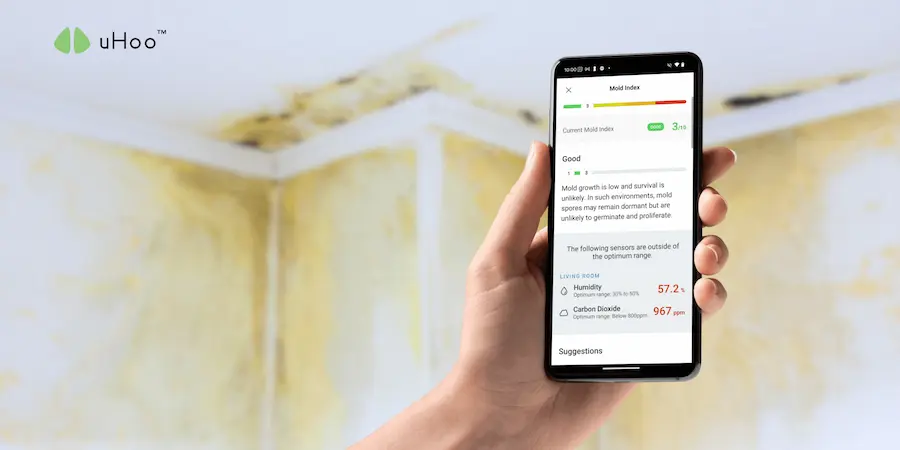
- Continuous Monitoring: An intelligent air quality monitor is your most vital tool. Devices like uHoo track real-time humidity, temperature, and other factors. Crucially, the uHoo Mold Index synthesizes this data into a dynamic risk assessment. This unique index doesn’t just show you current conditions, but intelligently calculates the likelihood of mold growth based on the interplay of various environmental parameters. This unparalleled insight provides an early warning, showing you how to prevent mold by signaling when conditions are trending towards favoring mold, allowing for intervention before it’s too late.
Chapter 2: Vigilant Leak Detection and Repair
- Immediate Action: Any water leak, no matter how small, is a mold risk. Fix leaky pipes, dripping faucets, and roof leaks immediately.
- Thorough Drying: After any water intrusion, it’s critical to dry out the affected area completely within 24-48 hours. Use fans, dehumidifiers, and even professional water extraction if necessary.
- Smart Leak Detectors: Place Wi-Fi enabled leak detectors under sinks, near hot water heaters, in appliance drip pans, and in basements. These send instant alerts to your phone, giving you precious time to prevent extensive water damage.
Chapter 3: Optimizing Ventilation and Airflow
- Exhaust Fans: Always use exhaust fans in bathrooms during and for at least 15-20 minutes after showering. Use kitchen exhaust fans when cooking. Smart fans can automate this process based on humidity levels.
- Whole-Home Ventilation: For tightly sealed, energy-efficient homes, consider Energy Recovery Ventilators (ERVs) or Heat Recovery Ventilators (HRVs). These systems provide controlled fresh air exchange, removing stale, moist indoor air while retaining energy and managing humidity.
- Improve Air Circulation: Ensure furniture isn’t pushed directly against exterior walls, allowing air to circulate. Open windows and doors regularly when outdoor humidity is low to air out your home.
Chapter 4: Addressing External Factors
- Gutter and Downspout Maintenance: Keep gutters clean and ensure downspouts direct water at least 5-10 feet away from your home’s foundation.
- Landscape Grading: Ensure the ground around your house slopes away from the foundation to prevent water pooling.
- Foundation and Basement Sealing: Seal cracks in your foundation and consider waterproofing your basement if it’s prone to dampness.
By diligently following these strategies, you empower yourself as a proactive homeowner. Understanding how to prevent mold growth means more than just cleaning up after the fact; it means creating a continuously monitored, well-ventilated, and dry environment that actively repels mold, ensuring a healthier and safer home for everyone.