
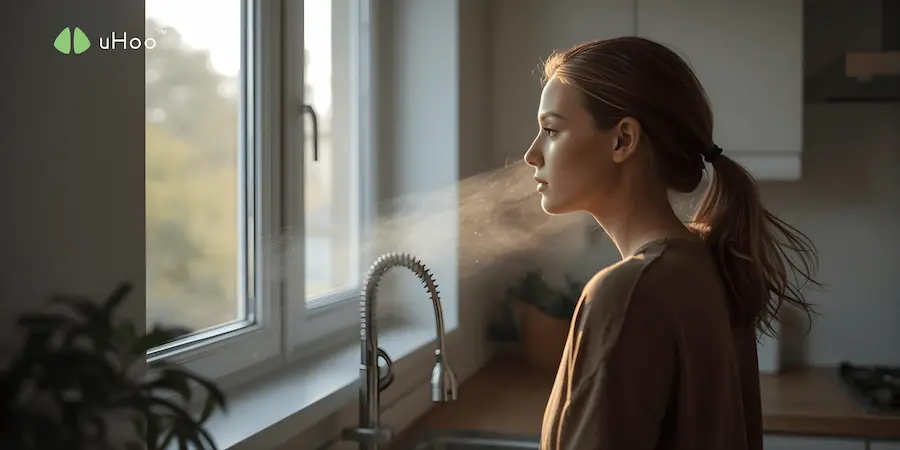
When scent shapes perception
Many people associate a pleasant scent with cleanliness. If a room smells like citrus, linen, or flowers, it feels fresh and safe.
However, fresh air vs clean air are not always the same. Scent influences perception, but it does not necessarily reflect what is happening at an air quality level.
In some cases, fragrance can mask pollutants rather than remove them.
What creates indoor odors
Indoor odors come from a wide range of everyday sources.
Common contributors include
• Cooking emissions
• Cleaning products
• Air fresheners and scented candles
• Building materials and furnishings
These sources release volatile organic compounds, or VOCs, into the air. Some VOCs carry noticeable scents, while others are odorless.
Fragrance does not equal purification
Air fresheners and scented sprays are often used to improve how a space smells. While they change odor perception, they typically do not eliminate pollutants.
In fact, some fragranced products introduce additional VOCs into the environment.
This means a room may smell pleasant while still containing airborne irritants.
The difference between fresh air and clean air
Understanding fresh air vs clean air requires separating scent from substance.
Fresh air usually refers to airflow or outdoor ventilation. Clean air refers to air with low pollutant concentrations.
A space can smell neutral yet contain elevated CO2 or particulate levels. Conversely, a scented space may still hold chemical compounds that affect comfort and health.
Why odor can be a warning sign
Not all odors are artificially pleasant. Musty or chemical smells often signal underlying air quality issues.
For example
• Mold growth may create a damp odor
• VOC buildup may produce sharp or synthetic smells
• Poor ventilation may lead to stale air scent
Recognizing these signals can help homeowners act early.
Moving beyond scent-based judgment
Relying on smell alone is not a reliable way to assess indoor air quality. Many pollutants are invisible and odorless.
Understanding actual air conditions requires measurable insight rather than sensory perception.
Smart air monitors like uHoo Caeli provide real-time visibility into VOCs, humidity, CO2, and other air quality factors, helping households distinguish between air that simply smells fresh and air that is genuinely clean.