
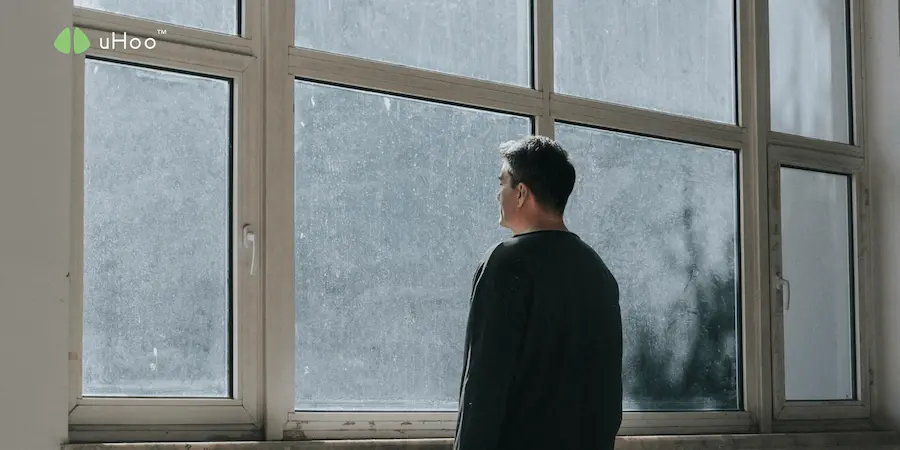
When a wildfire’s smoke fills the sky, the most common advice is to stay indoors and close all windows and doors. The assumption is that your home is a perfectly sealed fortress, a sanctuary from the outside pollution. If you’ve ever noticed a faint smoky smell inside your home even with everything shut tight, you’ve experienced the surprising truth: your home is not air-tight.
Understanding how wildfire smoke sneaks into a “sealed” home is the first step to truly protecting your indoor air quality. The key to this invasion is the size of the most dangerous component of wildfire smoke: PM2.5. These particles, 2.5 micrometers or less in diameter, are microscopic. They are so small that they can pass through tiny cracks and openings that you would never notice with the naked eye.
Think of the small gaps around window and door frames, the minuscule cracks in your home’s foundation, and the small openings around plumbing or wiring that pass through walls. These pathways, collectively known as “infiltration,” are the primary routes for smoke to enter your home.
Your home’s ventilation system can also be a significant entry point. Many HVAC systems, even when the fan is not running, have an intake that is not fully sealed. If your system is set to “fresh air” mode or has an open damper, it can actively pull in smoke from the outside.
Even exhaust fans, like those in bathrooms or above a stove, can create a negative pressure environment that pulls in unfiltered air from any available opening, bringing in wildfire smoke along with it.
Once the smoke gets in, it doesn’t just settle. The lightweight PM2.5 particles can remain suspended in your indoor air for hours, or even days, where they are continuously inhaled by you and your family. Unlike larger dust particles that settle quickly, these fine particles are highly mobile and can travel from room to room, reaching every corner of your home.
This silent infiltration poses a serious health risk. Inhaling these particles can cause a range of health issues, from immediate symptoms like coughing and eye irritation to long-term problems like reduced lung function and an increased risk of heart and lung disease.
The solution to this problem starts with awareness and a proactive approach. You cannot rely on your senses alone, as they are often fooled by the invisible nature of these particles. An indoor air quality monitor is an essential tool for understanding the air you breathe.
A device like uHoo provides real-time data on PM2.5 levels, giving you a clear window into your indoor air. With uHoo, you can see exactly when smoke is infiltrating, allowing you to take immediate action, such as sealing a leaky window or turning on an air purifier.
By understanding how wildfire smoke sneaks into a “sealed” home, you can take effective steps to turn your sanctuary into a truly safe refuge.