
Indoor air quality (IAQ) is a silent factor in our daily health. While many focus on filtering out particles like dust and pollen, one of the most fundamental yet overlooked components of healthy air is humidity control.
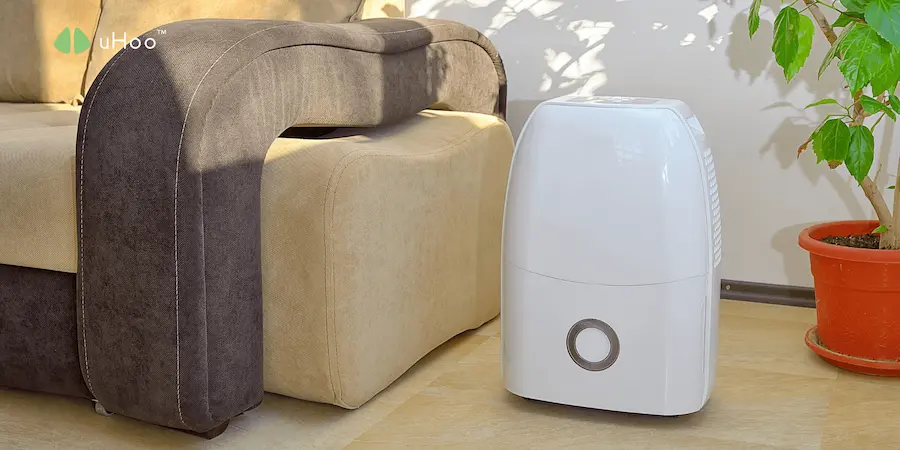
Traditional, manually-operated dehumidifiers have long been the clunky solution, but a new generation of smart dehumidifiers is completely changing the game, transforming humidity control from a sporadic chore into a seamless, data-driven element of a smart home ecosystem. This revolution is powered by smart sensors and connectivity, leading to unparalleled efficiency and effectiveness.
The core of this revolution lies in a smart dehumidifier’s ability to communicate and learn. Unlike their analog predecessors, which often ran non-stop or relied on rudimentary timers, smart models use highly accurate digital hygrometers to read the exact relative humidity (RH) in real-time.
This precise data allows the unit to operate only when necessary, maintaining the ideal humidity range (typically between 40% and 50%), which is critical for human health and home preservation.
High humidity (above 60%) is a notorious breeding ground for mold, mildew, and dust mites, all of which release irritating spores and allergens into the air. Conversely, excessively low humidity can dry out skin, irritate respiratory passages, and even damage wood furniture and structures.
A smart dehumidifier moves beyond simply turning on and off. Many models integrate with smart home platforms, allowing for remote control and, more importantly, automation. Imagine a scenario where a sudden rainstorm spikes the RH in your basement. A smart dehumidifier doesn’t wait for you to notice the musty smell.
It senses the change, consults its pre-set ideal range, and powers up to mitigate the moisture spike immediately. This proactive approach prevents the brief window of high humidity that could otherwise trigger mold growth.
Furthermore, some advanced systems can coordinate with other devices for a holistic air quality strategy. For instance, if an independent indoor air quality monitor, such as the comprehensive device from uHoo that tracks nine different air parameters, detects a surge in volatile organic compounds that are often exasperated by dampness, it can signal the smart dehumidifier to intensify its operation. This connected functionality ensures that all aspects of air quality are working in concert.
The long-term benefits of this “set it and forget it” control are substantial. By constantly maintaining an optimal humidity level, a smart dehumidifier minimizes the presence of major indoor allergens, leading to reduced allergy and asthma symptoms for the occupants. It also protects your home itself, preventing costly damage like warping of wooden floors and furniture, peeling paint, and the structural decay caused by chronic dampness.
The energy efficiency is another key feature, as the unit is not running needlessly, which saves on electricity bills. In essence, smart dehumidifiers are not just machines for removing water. They are sophisticated environmental managers, providing a foundation of balanced moisture that is essential for a truly healthy home. They represent a fundamental shift in how we approach the invisible but crucial element of humidity.