
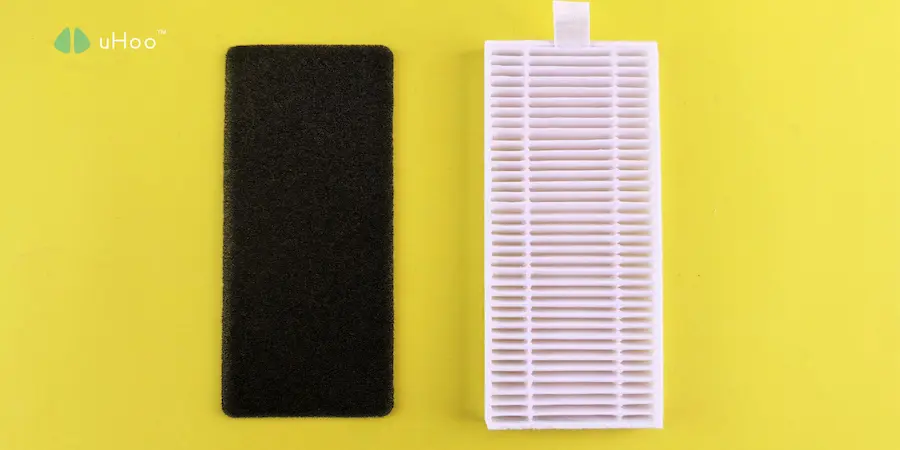
For many, HEPA is a familiar acronym, often seen on air purifiers and vacuum cleaners, but what exactly is it and how does this seemingly simple filter perform such an essential role in cleaning our indoor air?
What is a HEPA Filter?
HEPA stands for High-Efficiency Particulate Air. It’s not a brand name but rather a standard for air filters. To qualify as a true HEPA filter, it must satisfy a rigorous efficiency standard. It needs to capture at least 99.97% of airborne particles that are 0.3 micrometers (µm) in diameter.
Why 0.3 micrometers? This particular size, often referred to as the “Most Penetrating Particle Size” (MPPS), is the trickiest for filters to capture. Particles smaller or larger than 0.3 µm are actually easier to trap due to different physical phenomena. This stringent requirement ensures that a HEPA filter is incredibly effective at removing a vast spectrum of indoor air pollutants.
How Does a HEPA Filter Work?
Unlike a simple sieve that only blocks particles larger than its holes, a HEPA filter employs a sophisticated network of randomly arranged, extremely fine fibers, typically made of fiberglass. Imagine a tangled, three-dimensional web, incredibly dense and intricate.
As air passes through this fibrous labyrinth, particles are captured through a combination of three primary mechanisms:
- Interception: Larger particles, as they travel through the filter, simply come into contact with a fiber and stick to it. Think of it like a fly getting caught in a spiderweb.
- Impaction: Medium-sized particles, due to their inertia, deviate from the airflow streamlines and collide directly with a fiber. They are unable to navigate the sharp turns of the filter’s fibers and therefore impact and adhere to them.
- Diffusion: The smallest, most elusive particles (those below 0.1 micrometers) move in a very erratic, random fashion due to collisions with gas molecules. This phenomenon, known as Brownian motion, increases the likelihood that these tiny particles will eventually collide with a fiber and become trapped. This mechanism is particularly effective for the MPPS and even smaller particles.
The combination of these three mechanisms, working in concert, allows HEPA filters to effectively trap a wide range of airborne contaminants, including:
- Allergens: Pollen, pet dander, dust mite feces, mold spores
- Dust: Household dust, construction dust
- Smoke particles: From cigarettes, wildfires, cooking
- Bacteria and some viruses: While HEPA filters don’t kill these microorganisms, they can capture them as they often attach to larger airborne particles.
The Benefits of Breathing HEPA-Filtered Air
Integrating HEPA filtration into your home offers significant advantages for your health and well-being:
- Reduced Allergy and Asthma Symptoms: By removing common triggers from the air, HEPA filters can provide immense relief for allergy and asthma sufferers.
- Improved Respiratory Health: Less exposure to airborne pollutants means less irritation and strain on your respiratory system.
- Cleaner Home Environment: Less dust settling on surfaces and improved overall air freshness.
- Enhanced Peace of Mind: Knowing you’re breathing cleaner air contributes to a healthier living environment.
Complementing Your HEPA Filter with a uHoo Air Quality Monitor
While HEPA filters are champions at removing particulate matter, indoor air quality is a complex interplay of various factors. To truly understand and optimize your indoor environment, a HEPA filter is best complemented by a comprehensive air quality monitor like the uHoo.
A uHoo air quality monitor goes beyond just particulate matter, providing real-time data on a multitude of indoor air pollutants, including PM2.5, PM10, VOCs, CO2, CO, NO2, O3, temperature, and humidity.
By combining the powerful filtration capabilities of a HEPA filter with the insightful data provided by a uHoo air quality monitor, you gain a complete picture and control over your indoor air. The HEPA filter actively cleans, while the uHoo monitor empowers you to understand what’s in your air and take proactive steps to ensure your home remains a sanctuary of clean, healthy air.