
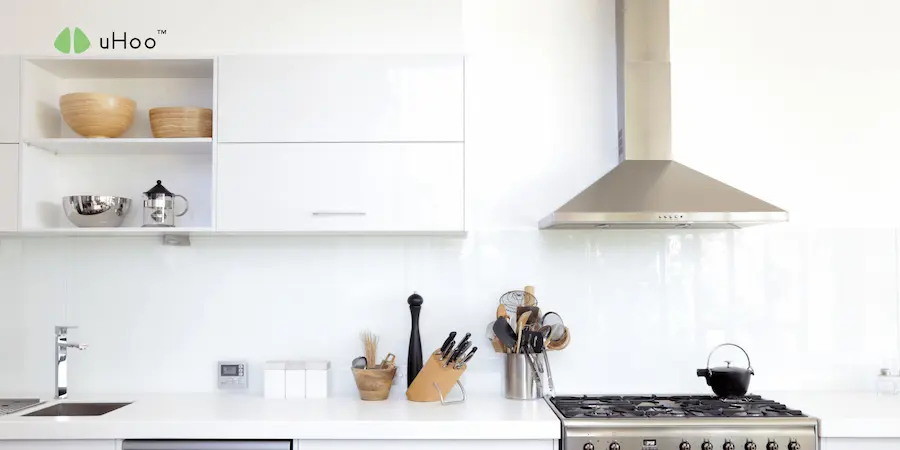
Your kitchen is the heart of your home, a place of warmth and nourishment. But what you might not know is that it can also be a significant source of indoor air pollution. From the invisible gases of your stove to the microscopic particles from frying, cooking can release a variety of pollutants that affect your health.
Fortunately, there is a simple and effective solution: the range hood. This essential range hood guide will help you understand why it’s so important and how to use it properly.
The Essential Range Hood Guide
What Does a Range Hood Do?
A range hood is more than just a fan. Its primary purpose is to capture and remove pollutants generated by cooking. This includes:
- Particulate Matter (PM2.5): Tiny, invisible particles from frying, searing, and broiling that can get deep into your lungs.
- Nitrogen Dioxide (NO2): A gas released from gas stoves that can irritate your respiratory system and trigger asthma symptoms.
- Carbon Monoxide: A highly dangerous gas that can be released by faulty gas burners.
- Grease, Steam, and Odors: While less dangerous, these still need to be managed to keep your kitchen clean and comfortable.
Ducted vs. Ductless: The Most Important Choice
For optimal health, a ducted range hood is always the best choice. It physically vents all the polluted air to the outside of your home. A ductless hood, on the other hand, simply filters and recirculates the air, meaning that many of the most dangerous pollutants remain in your home. If you’re building a new home or renovating, make a ducted system a top priority.
Key Features to Consider
When shopping for a range hood, don’t just look at the design. Focus on these key features:
- CFM (Cubic Feet per Minute): This is the power of the hood. A higher CFM rating means more air is being pulled out of your kitchen. For gas stoves, a high CFM is essential.
- Noise Level (Sones): The quieter the hood, the more likely you are to use it consistently.
- Size: The hood should be at least as wide as your stove to ensure it captures all the pollutants.
Best Practices for Use
To get the most out of your range hood, follow these simple tips:
- Turn it on before you start: Give the fan a few minutes to create an airflow before you start cooking.
- Keep it on after you finish: Let the fan run for at least 10 minutes after you’re done to clear any lingering pollutants.
- Clean your filters: Regularly clean or replace your grease and charcoal filters. Dirty filters can’t do their job.
The Ultimate Test
The only way to truly know if your range hood is doing its job is to measure the results. A uHoo air quality monitor in your kitchen can provide real-time data on the levels of PM2.5, NO2, and other pollutants. This allows you to see the direct impact of your cooking and ensures that your range hood is effectively protecting your family. With this essential range hood guide and a uHoo monitor, you can breathe easy in the kitchen.