
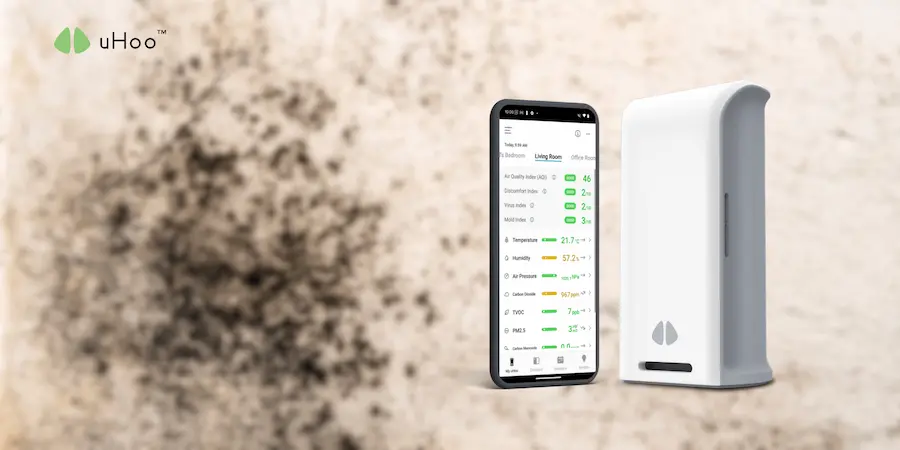
For decades, the standard response to indoor moisture and the threat of mold has been the standalone dehumidifier. While effective at reducing overall ambient humidity, this device is a reactive tool, often running continuously and blind to the precise conditions that trigger mold growth in specific microclimates. Today, connected gadgets have moved mold prevention beyond this basic approach, creating a network of smart solutions that are predictive, precise, and infinitely more efficient at controlling the conditions that lead to mold spores.
The key to this modern strategy is data-driven, localized control. Mold growth is not determined by humidity alone. It is a complex function of relative humidity, temperature, and dew point. The ability of connected gadgets to measure these parameters in real time and communicate with each other is what makes them preventative. For instance, a smart air quality monitor placed in a basement can instantly detect a dangerous spike in relative humidity, and instead of waiting for a manual adjustment, it can trigger a smart plug to activate the dehumidifier only when truly necessary. This integration prevents the wasteful, continuous running of appliances.
Beyond the obvious dehumidifier, a network of connected devices can actively monitor and adjust the environment. Smart exhaust fans, particularly those in bathrooms and kitchens, are now being integrated with environmental sensors. Instead of simply turning on with a light switch, these fans activate automatically when the internal sensor detects a high-moisture event, such as a long shower, and run until the humidity has dropped back to a safe level. This is critical because it addresses the single most common source of high, localized moisture that is quickly absorbed by building materials.
Another critical connected gadget is the smart thermostat or smart HVAC controller. Mold risk increases dramatically when the interior surface temperature of an outer wall drops below the dew point, causing condensation, the perfect starter fluid for mold. Advanced smart thermostats can monitor external weather conditions and indoor environmental data to intelligently modulate heat and fan usage, preventing surface temperatures from dropping too low. This subtle adjustment is a powerful and proactive tool in preventing mold growth behind furniture or in exterior wall cavities.
The foundational element for this entire smart ecosystem remains the highly accurate, continuous indoor air quality monitor. A device like the uHoo is essential because it translates complex environmental data into a single, actionable metric with its unique uHoo Mold Index. This original feature synthesizes the interplay of temperature and humidity, providing a clear, numerical score that lets the homeowner know the exact level of mold risk. It moves the entire conversation beyond humidity percentage to a holistic assessment, ensuring that all those connected gadgets are focused on mitigating a specific, calculated threat.