
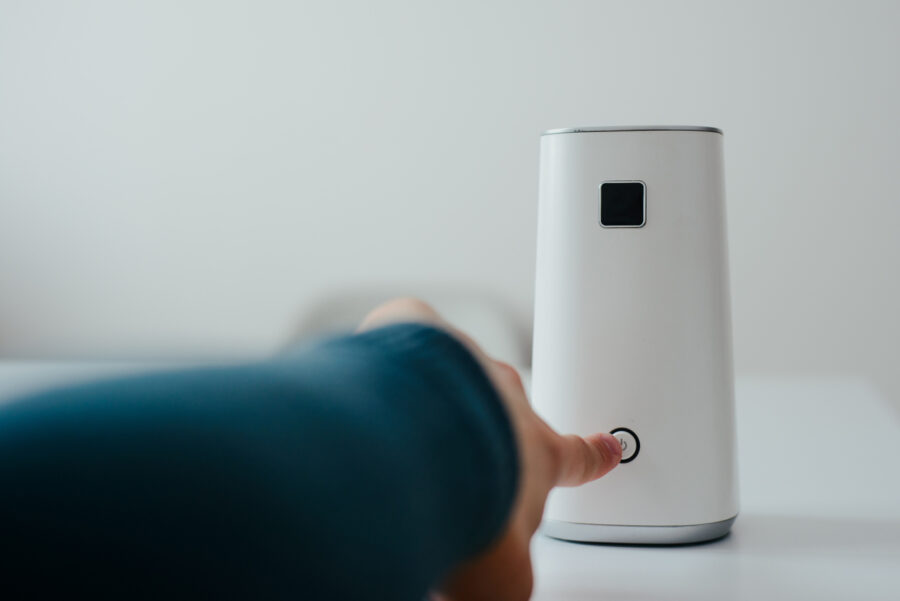
Have you ever wondered why the air in some rooms feels fresher and lighter than others, even without windows open? The secret often lies in unseen particles and a technology like air ionizer, devices designed to improve indoor air quality by charging airborne contaminants so they’re easier to remove.
Imagine walking into a room where dust, pollen, bacteria, and even odors are significantly reduced, not just filtered, but actively pulled out of your breathing zone. That’s what proper air ionization promises.
In this article, you’ll learn how air ionizers work, their benefits, potential risks, how to choose the right one, and expert tips to get the most out of this air quality technology.
What are air ionizers and how do they work?
An air ionizer is a machine that releases negative ions into the air. These ions are simply tiny, charged particles. When these ions stick to dust, smoke, pollen, or bacteria floating around, the dirty particles become heavier and fall onto surfaces, instead of staying in the air you breathe. Negative ions also happen naturally in places like forests, waterfalls, and beaches.
How it works:
- The Charge: These released negative ions are like tiny electrical magnets.
- The Attraction: They immediately seek out and attach themselves to airborne pollutants (like dust, pet dander, mold spores, and viruses), which typically carry a positive or neutral charge.
- The Clump: Once the negative ions bond with the pollutants, they become heavier.
- The Drop: This new, heavier cluster of particles is too weighty to remain suspended in the air. Consequently, they fall out of your breathing space, settling onto nearby surfaces such as your floors, walls, and furniture.
This process efficiently removes pollutants from the air you breathe, offering a highly effective, often filterless, method of particle removal, particularly for ultra-fine particles.
Benefits of Ionized Air
When implemented safely, a high-quality ionizer can be a powerful tool in your comprehensive indoor air quality strategy.
- Cleaner Air: They help remove dust, pet dander, pollen, smoke, and other tiny particles, making the air fresher.
- Odor Reduction: Ionizers can help lessen smells from cooking, pets, or cigarette smoke.
- Quiet and Energy-Efficient: Most ionizers run almost silently and use very little electricity.
- Possible Mood Boost: Some studies suggest negative ions may help improve mood or reduce stress, but the evidence is not strong or guaranteed.
Possible Problems & Safety Concerns
Ozone Production
- Some ionizers create ozone as a side effect.
- High ozone levels can irritate your throat or lungs.
- Always choose ionizers that are certified safe and produce very low ozone.
Not Effective for All Pollutants
- Ionizers don’t remove gases or chemicals (VOCs).
- They also don’t replace a good HEPA filter.
More Dust on Surfaces
- Because dirty particles fall out of the air, they land on tables, floors, and shelves, so you may need to dust more often.
The Essential Role of Air Quality Monitoring
You can’t always see what’s in the air you breathe and you cannot manage what you do not measure. Dust, chemicals, and even ozone can hide in “clean-looking” air. That’s why air quality monitoring is important, it shows you exactly what’s in your environment so you can keep your home truly safe and healthy.
Verification of Efficacy
An ionizer’s core function is to reduce airborne particles. Without a monitor, you cannot verify if your device is performing effectively.
- uHoo’s Role: The uHoo device measures multiple key pollutants, including. By watching the uHoo App dashboard, you can see the precise, real-time reduction in particle concentration when your ionizer is running, confirming its efficacy.
Ozone and VOC Safety Check
The most significant risk with ionizers is the generation of harmful gases. Even a certified ozone-free device can sometimes react with other chemicals (like cleaning agents) to form new Volatile Organic Compound (VOCs).
- uHoo’s Role: uHoo provides a complete gas detection suite, allowing you to monitor nine different indoor air parameters, including Ozone and VOCs. If your ionizer is causing any spikes in these harmful gases, the uHoo device will immediately alert you, allowing you to turn off the device and protect your family’s health.
Smart, Automated Control
For tech-savvy homeowners and business owners, uHoo delivers the ultimate in pollutant management through automation.
- Automation: By integrating your ionizer with a smart plug and connecting it to your uHoo device, you can set rules to automatically switch the ionizer on the moment uHoo detects an unhealthy spike in particulate matter. This saves energy and ensures your air is only cleaned precisely when it needs to be.

Frequently Asked Questions (FAQs)
What is the main difference between an air ionizer and a traditional HEPA filter purifier?
A traditional HEPA filter purifier physically traps particles by pulling air through a dense filter. An air ionizer, however, uses an electrical charge to clump particles together so they fall out of the air. Ionizers are particularly effective at removing ultra-fine particles that might slip through some filters.
Do air ionizers need replacement filters?
Generally, no. Most air ionizers operate without traditional physical filters, which contributes to their low maintenance and lower running costs. The collected pollutants settle onto nearby surfaces, which then need to be cleaned as part of your regular dusting routine.
Why is ozone production a problem with some air ionizers?
Ozone is a lung and respiratory irritant that can be created as a byproduct when some older or high-voltage ionizers convert oxygen in the air. Since the goal is to improve air quality, an ionizer that produces ozone works against that purpose and can seriously impact health, especially for those with asthma or other respiratory conditions. Always choose a certified ozone-free device.
Can an Air Quality Monitor (AQM) like uHoo help me use my ionizer safely?
Absolutely. An AQM is essential for safety and verification. It allows you to:
- Verify Efficacy: Confirm that the ionizer is actually reducing airborne particulate matter.
- Check for Safety: Ensure your device is not inadvertently generating harmful levels of gases like Ozone or Volatile Organic Compounds (VOCs).
By measuring and monitoring in real-time, you gain the confidence that your air cleaning strategy is effective and safe.