The secret weapon in your range hood’s fight against indoor air pollution is the filter. This often-overlooked component determines the difference between a high-performance exhaust system and a noisy, ineffective machine. Understanding when to clean or, critically, when to replace this filter is the most important maintenance decision you will make for your kitchen’s air quality.
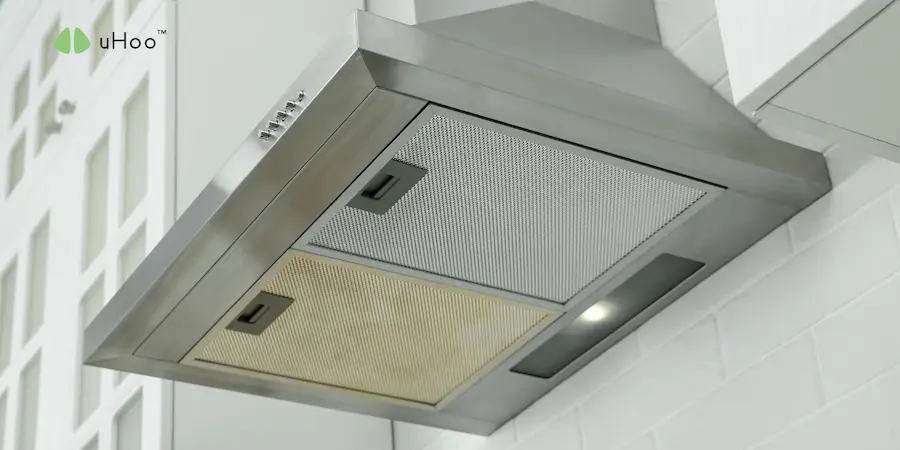
For most ducted range hoods, the secret weapon is the metal mesh or baffle grease filter. This filter is designed to be the first line of defense, physically trapping aerosolized grease particles.
When to Clean: These filters should be cleaned regularly, typically every three to four weeks for an average cooking household. The cleaning schedule must be responsive, however, not rigid. The filter needs cleaning as soon as the mesh looks visibly dark, sticky, or clogged. If you hold the filter up to the light and cannot easily see through it, it is saturated and severely restricting airflow. Immediate cleaning (a hot soak in a strong degreaser) is necessary to restore the hood’s CFM and maintain proper capture efficiency. Cleaning ensures the fan is not struggling and that pollutants are being evacuated.
For ductless (recirculating) hoods, the secret weapon is the activated charcoal or carbon filter. This filter is completely different from the grease filter. It does not vent air outside; instead, it is designed to chemically absorb odors, smoke, and fine particulates before the cleaned air is blown back into the kitchen.
When to Replace: The charcoal filter cannot be cleaned and must be replaced. Its lifespan is finite, determined by how saturated the carbon becomes. In most cases, it needs to be replaced every three to six months. Once the carbon is saturated, the filter becomes a dense blockage that both stops absorbing pollutants and severely restricts the fan’s airflow. A hood running with a saturated carbon filter is doing little more than circulating stale air, smoke, and odors, making replacement a non-negotiable step for clean air.
Regardless of the filter type, failure to address its saturation will cause a cascade failure in the hood’s performance. Airflow will plummet, and the fine particulate matter (PM2.5) and nitrogen dioxide (NO2) generated by cooking will be forced back into the kitchen and the rest of the home, compromising respiratory health.
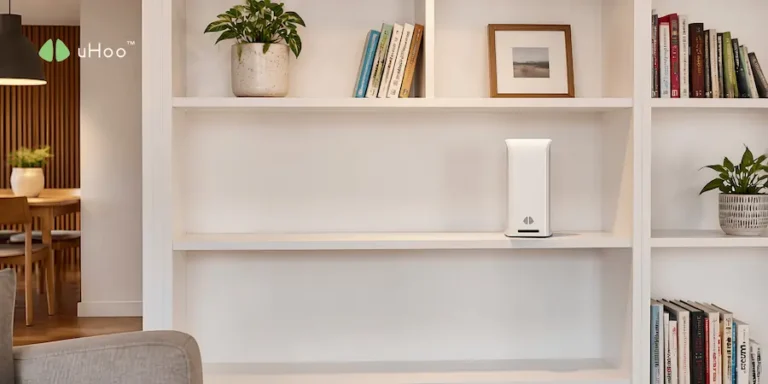
To scientifically guide your maintenance decisions, a smart air quality monitoring system is invaluable. The uHoo air quality monitor offers an original way to track the filter’s performance decline. By continuously tracking the levels of PM2.5 during cooking, uHoo can provide objective evidence of performance. If uHoo alerts you to consistently rising PM2.5 spikes, it’s a clear data signal that your secret weapon (the filter) is failing and needs immediate attention, allowing you to clean or replace it precisely when it matters most for your home’s air.